
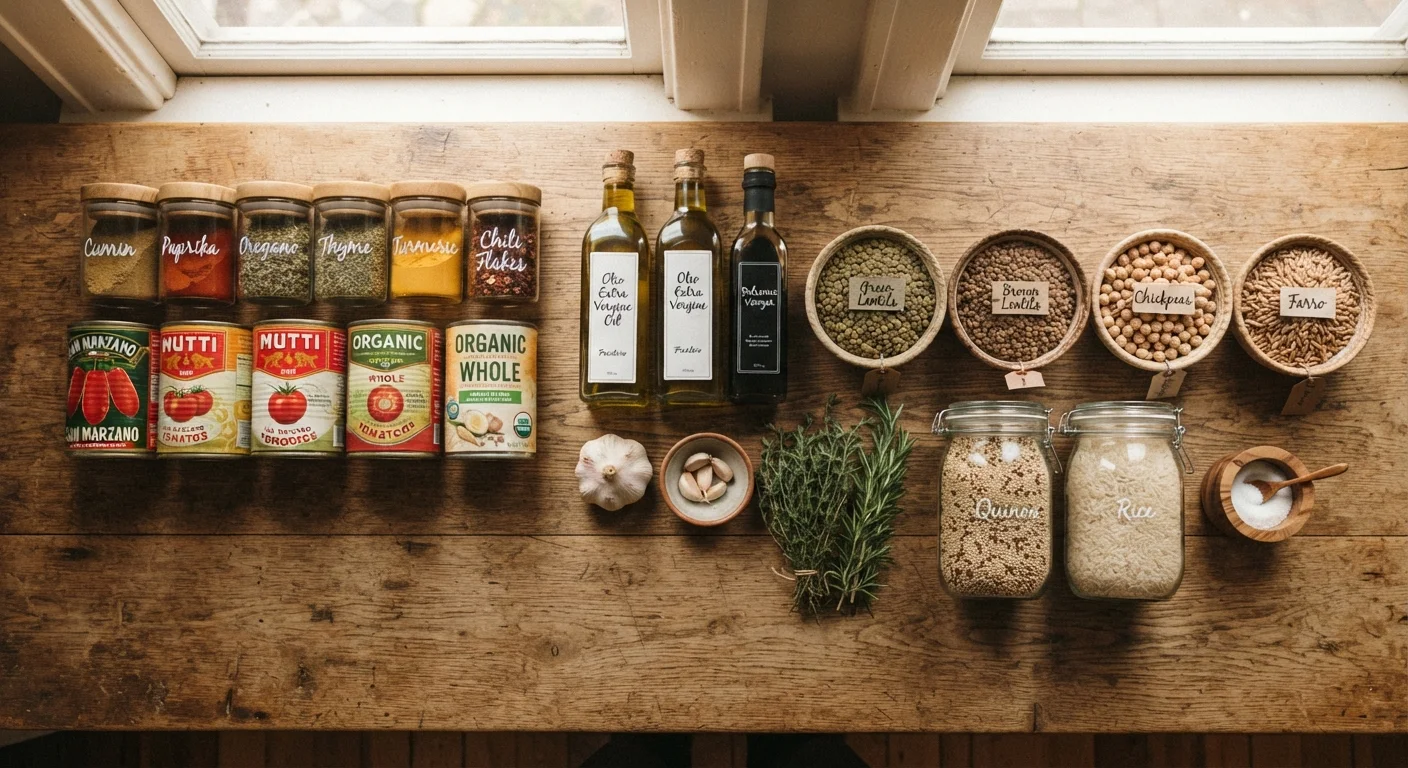
Why the pantry matters more than the protein
Most families think the main ingredient does the heavy lifting in a meal. In practice, the items sitting in the cabinet are what separate flat, forgettable food from something worth repeating. A chicken thigh roasted with nothing but salt is fine. The same thigh rubbed with smoked paprika, cumin, and garlic powder is a different meal entirely, and the cost difference is cents per serving.
Building a pantry around a core set of flavor-building ingredients is one of the most effective moves a budget cook can make. Spending less at the grocery store does not require eating dull food. It requires understanding which cheap ingredients punch above their weight.
| Cost of a basic spice starter set | Roughly $10 to $15 total (store brand) (Based on typical prices at mainstream US grocery chains) |
| Shelf life of ground spices | 1 to 3 years in a sealed jar (USDA food storage guidelines) |
| Cost per serving of dried lentils | Under $0.40 (Based on average retail price of approximately $1.75/lb) |
| Shelf life of soy sauce (opened) | Up to 3 years refrigerated (General food safety guidance) |
| Cost per serving of pasta (dry) | Under $0.30 (Based on a 1 lb box at approximately $1.20 to $1.50) |
| Single most versatile pantry acid | Apple cider vinegar |
The flavor foundations worth buying first
Some pantry items earn their shelf space faster than others. These are the ones that show up across the widest range of meals.
Aromatics: garlic, onion, and dried chiles
Fresh garlic and yellow onions cost very little per pound and form the base of an enormous number of dishes across cuisines. Dried chiles (ancho, guajillo, chipotle in adobo) add depth that no spice blend fully replicates. A single can of chipotles in adobo, which costs around a dollar at most mainstream stores, seasons soups, marinades, and grain bowls for several meals.
Acids: vinegar and citrus
Acid lifts food. A splash of apple cider vinegar or a squeeze of lime at the end of cooking can rescue a dish that tastes flat. White wine vinegar, plain white vinegar, and apple cider vinegar are all affordable and shelf-stable. Buying lemons or limes individually rather than in bags prevents waste. Common shopping habits like buying a large bag of citrus when you only need one or two add up quietly.
Fat: olive oil and neutral oil
Fat carries flavor and controls texture. Keeping a moderately priced olive oil for finishing and dressings, plus a neutral oil like canola or vegetable for high-heat cooking, covers most cooking tasks. Buying the larger containers (when storage allows) usually lowers the cost per ounce noticeably.
Spice shelf essentials
The following spices cover the widest range of recipes for the lowest combined cost: cumin (ground), smoked paprika, garlic powder, onion powder, red pepper flakes, dried oregano, and ground coriander. Store brands of these cost a fraction of name-brand jars with no meaningful difference in flavor. See where store-brand swaps actually save money for a category-by-category breakdown.
Fermented and umami-heavy pantry items
Umami
One of the five basic tastes, often described as savory or meaty. It comes from naturally occurring compounds in foods like soy sauce, tomato paste, aged cheese, and mushrooms, and makes food taste fuller without adding more salt or fat.
Aromatics
Ingredients like onion, garlic, celery, and dried chiles that form a flavor base when cooked in fat at the start of a recipe. They provide background complexity rather than a single dominant taste.
Pantry meal
A dish made almost entirely from shelf-stable ingredients already on hand, with little or no fresh shopping required. These meals are central to low-waste, budget-conscious cooking.
Tomato paste
A concentrated form of cooked tomatoes, sold in small cans or tubes. Because most of the water is removed, it delivers intense flavor in small amounts and is much more economical per unit of flavor than canned diced tomatoes.
Certain ingredients add savory depth (sometimes called umami) that makes food taste more complete without adding meat or cost. Soy sauce is one of the most cost-effective flavor boosters available: a few tablespoons add salt and depth to braises, stir-fries, and marinades. Worcestershire sauce functions similarly in Western-style dishes. Fish sauce, common in Southeast Asian cooking, is intensely savory and a small bottle lasts months. Tomato paste, especially the kind sold in small cans, concentrates cooked-tomato flavor in a way that fresh or canned diced tomatoes do not. Browning a tablespoon of tomato paste in oil before adding liquid builds a flavor base that takes a weeknight soup from thin to substantial.
Dried mushrooms (shiitake or porcini) dissolve into broths and sauces and add a meaty quality. They cost more per ounce than most spices but a small amount goes a long way. The soaking liquid is also usable as a light broth. This kind of resourcefulness matters in a real food budget. Freezer cooking pairs well with pantry-forward cooking because both strategies reduce the number of decisions you have to make on tired weeknights.
Dry staples that stretch every meal
No pantry guide for budget cooking is complete without the dry staples that turn a small amount of protein or vegetables into a full meal. Dried lentils (green, red, or brown) cook in 20 to 30 minutes with no soaking and cost around $1.50 to $2.00 per pound at most stores. A pound of dried lentils feeds a family of four as a main dish. Rice and beans have the same arithmetic: very low cost per serving, high in protein and fiber, and adaptable to dozens of flavor profiles depending on what spices and aromatics you use. For a detailed cost comparison of dried versus canned, see dried beans vs. canned beans.
Rolled oats, pasta, and rice are the other three. All store well, all take on the flavors added to them, and all cost under a dollar per serving. Pasta in particular is a reliable vehicle for pantry-only meals: olive oil, garlic, red pepper flakes, and a handful of grated hard cheese from the freezer make a complete dish with no other shopping required. Budget eating does not have to mean nutritionally thin meals, and these staples support a varied, reasonably balanced diet when combined thoughtfully with produce.