
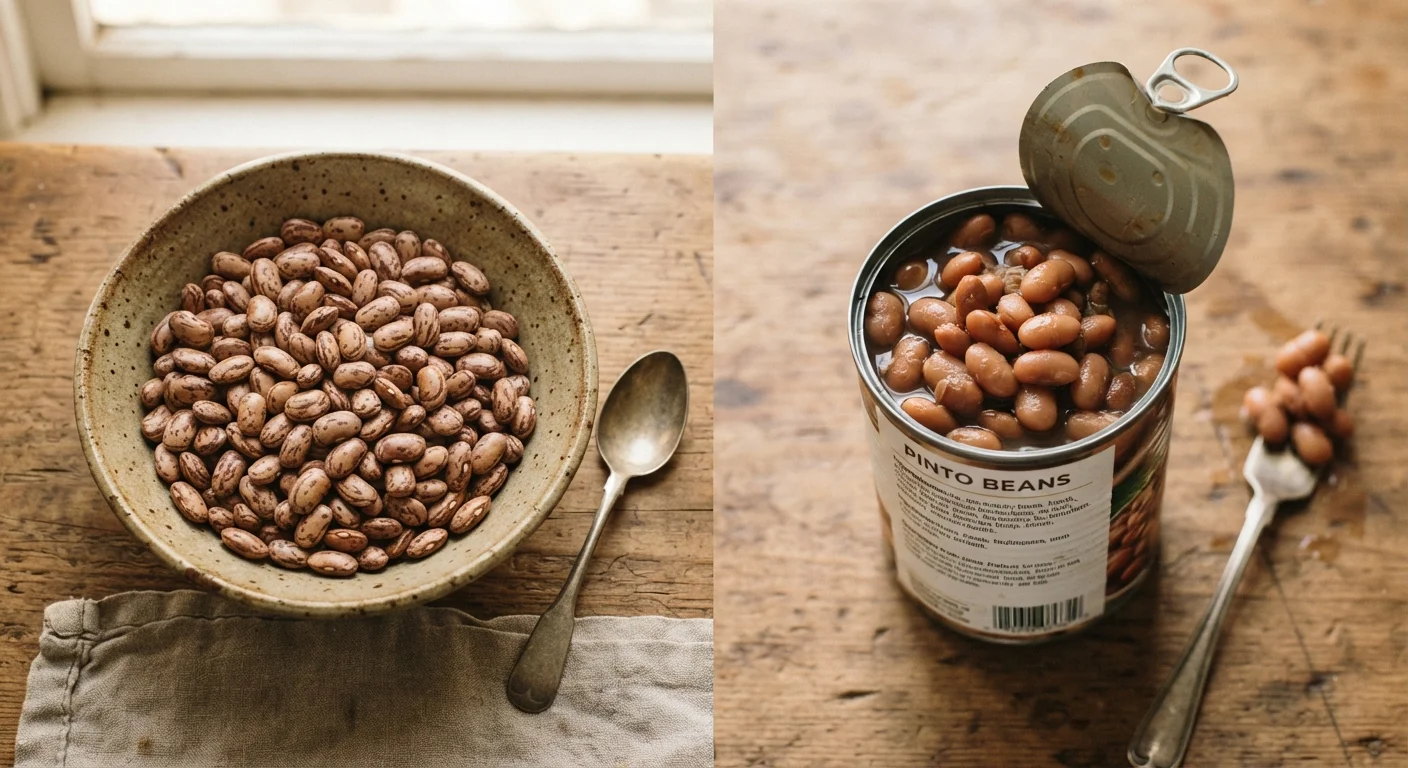
The real cost difference
At most mainstream US grocery stores, a 1-pound bag of dried pinto or black beans runs between $1.50 and $2.50. That pound produces roughly 5 to 6 cups of cooked beans after soaking and simmering. A 15-ounce can of the same beans, which contains about 1.5 cups of cooked beans, typically costs $0.80 to $1.50. To match the yield from one bag of dried beans, you would need about four cans, spending $3.20 to $6.00.
The math is straightforward: dried beans cost roughly half to one-third the price per cooked cup. For a family eating beans twice a week, that gap can add up to $10 to $20 a month in savings, depending on local prices and how much you consume. See the full comparison breakdown below.
| Criterion | Dried beans | Canned beans |
|---|---|---|
| Typical cost per cooked cup | $0.25 to $0.40 | $0.55 to $1.00 |
| Active prep time | 5 to 10 minutes | 2 minutes |
| Total time to table | 1.5 to 10 hours (soak + simmer) | 2 to 5 minutes |
| Sodium per half-cup (cooked) | Under 5 mg | 300 to 400 mg (standard) |
| Shelf life (unopened) | 1 to 2 years (best quality) | 2 to 5 years |
| Texture consistency | Variable (water quality, age) | Consistent |
| Works with pressure cooker | Yes, 25 to 40 minutes unsoaked | Not needed |
For more on stretching low-cost staples across the week, see which pantry ingredients pull the most weight in a budget kitchen.
Nutrition: closer than you think
Dried and canned beans start from the same raw material, so protein, fiber, and micronutrient levels are similar once cooked. A half-cup serving of cooked black beans delivers around 7 to 8 grams of protein and 7 grams of fiber regardless of which form you started with.
The real difference is sodium. Dried beans cooked with plain water contain almost no added sodium. Standard canned beans can contain 300 to 400 milligrams per half-cup. Rinsing canned beans under water for about 30 seconds removes a meaningful portion of that sodium, though not all of it. If you or someone in your household is monitoring sodium for a health reason, talk with a healthcare provider about how canned beans fit into your overall eating pattern. Low-sodium and no-salt-added canned options are widely available and narrow this gap further.
Common myths about budget eating often overstate nutritional sacrifices. Beans in either form are genuinely nutrient-dense.
The honest time calculation
Canned beans have one undeniable advantage: they are ready in two minutes. Open the can, drain, rinse, add to whatever you are cooking. That speed matters on a Tuesday evening when everyone is hungry and the clock says 6:15.
Dried beans have a longer path. Traditional stovetop cooking involves an overnight soak (8 hours, passive) followed by 60 to 90 minutes of simmering. A quick soak shortens this: boil beans for two minutes, let them sit for one hour, then simmer for 45 to 60 minutes. Active effort throughout is minimal, but you need to plan ahead.
A pressure cooker changes the math considerably. Unsoaked dried beans cook in 25 to 40 minutes at high pressure, with about five minutes of actual work. Cooking a large batch on Sunday and freezing portions in two-cup increments puts dried beans within reach on weeknights. Rice and beans as a regular meal becomes much more practical with a freezer stash ready to go.
When canned beans actually make more sense
Hard water can prevent dried beans from softening properly, leaving them grainy even after long cooking. If your tap water is noticeably hard, this is a real problem that canned beans sidestep entirely. Adding a pinch of baking soda to the cooking water can help, but results vary.
Older dried beans, meaning bags that have sat on a shelf for more than a year, also cook unevenly and sometimes never get fully tender. The date printed on the bag matters. Canned beans have consistent texture regardless of age within a reasonable shelf life.
For recipes where you need beans immediately and with a specific texture (whole and firm for salads, for example), canned beans are more predictable. Cooking dried beans from scratch introduces more variability in outcome, which matters in some dishes more than others.
A note on batch cooking
Cooking a large pot of dried beans, then freezing two-cup portions in zip bags, is one of the most effective ways to close the convenience gap. Frozen cooked beans thaw in the refrigerator overnight or in a pot of warm water in about 15 minutes. The per-serving cost stays close to dried-bean prices while the weeknight effort drops to roughly the same as opening a can.