
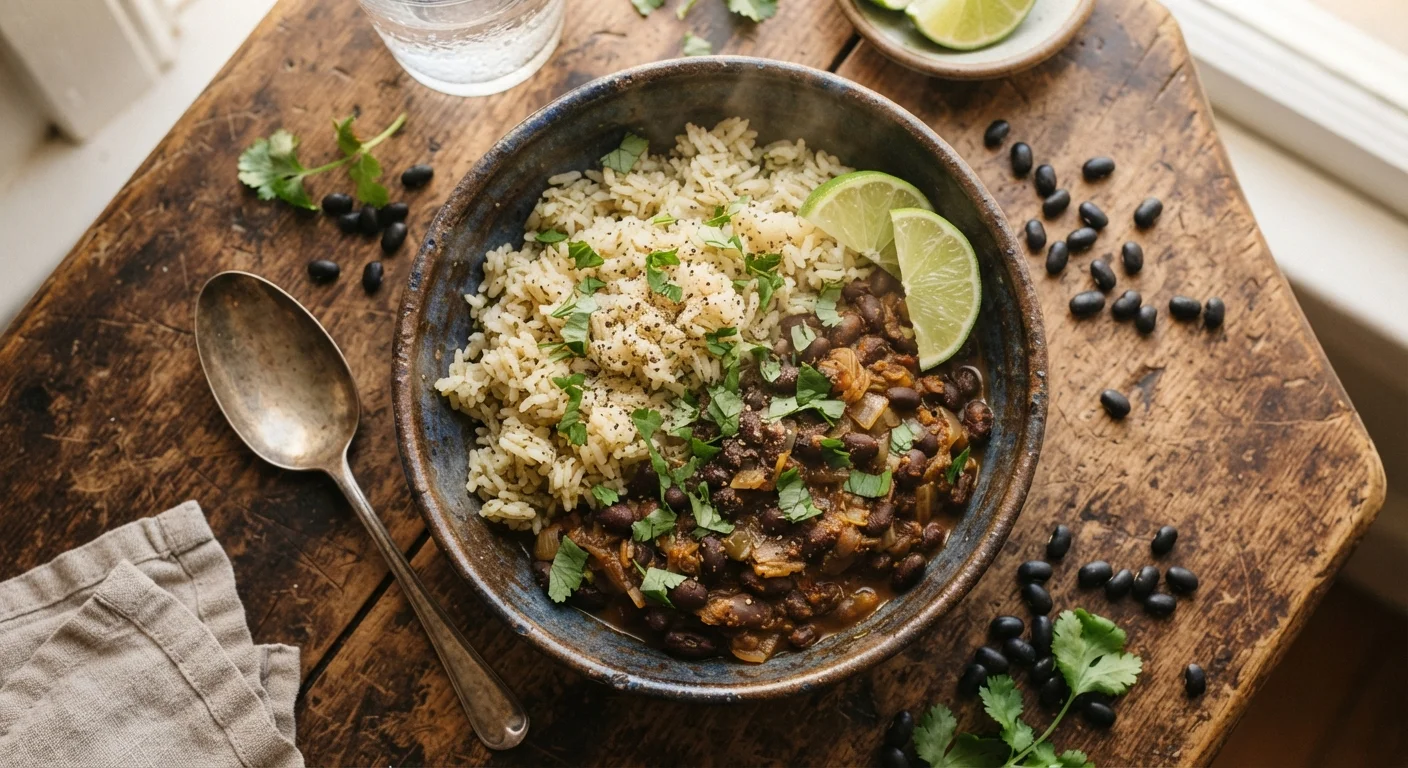
Why this combination works so well
Rice and beans appear together in the food traditions of Latin America, the Caribbean, West Africa, South Asia, and the American South. That geographic spread is not a coincidence. The pairing solves a nutritional problem and an economic one at the same time, which is why it has persisted across centuries and continents.
Individually, rice and beans each have a gap in their amino acid profiles. Rice is low in lysine; beans are low in methionine. Eaten together in the same meal or even across the same day, they complement each other so that the body gets what it needs to build and maintain protein. This is general nutrition education, not medical advice, but the principle is well-established in food science literature.
Beyond protein, the combination provides complex carbohydrates for sustained energy, dietary fiber from the beans, and a modest supply of iron, folate, and B vitamins. The caloric density is high enough to satisfy adults and children, which matters for families trying to stretch a grocery budget without leaving anyone hungry.
If you want a fuller picture of how affordable ingredients stack up nutritionally, the evidence on budget eating myths is worth reading alongside this guide.
The real cost of rice and beans
Prices vary by region and store, but the general cost structure is consistent. Long-grain white rice bought in a 5-pound bag at a mainstream grocery store typically runs between $0.05 and $0.10 per dry ounce. A one-pound bag of dried pinto or black beans usually costs between $1.50 and $2.50, and that pound yields roughly six cups of cooked beans, enough for four to six generous servings.
At those figures, a two-serving meal of rice and beans with dried beans can come in well under $1.00 total. Canned beans cost more per serving, often $0.80 to $1.50 per 15-ounce can, but they eliminate the need to soak and boil for an hour or more. The cost and convenience trade-offs between dried and canned beans depend heavily on how much time your household has on a given weeknight.
$0.50
Estimated cost per serving with dried beans
Based on typical U.S. grocery store prices for bulk long-grain rice and dried pinto or black beans.
6 cups
Cooked beans from one pound dried
One pound of dried beans yields roughly six cups cooked, providing four to six generous servings.
12-15g
Protein per combined serving
A half-cup each of cooked rice and black beans provides roughly 12 to 15 grams of protein.
Brown rice adds a few cents per serving and a longer cook time, but it also adds fiber and a slightly nuttier flavor. For families with a rice cooker, the hands-off cooking time makes either variety manageable on a weeknight.
One practical approach is to cook a large pot of dried beans on the weekend and refrigerate or freeze portions. Cooked beans keep in the refrigerator for up to five days and freeze well for several months. That eliminates the weeknight time barrier while keeping the cost at the dried-bean level.
Nutritional profile: what you actually get
A standard serving of cooked rice (about half a cup) with a half-cup of cooked black beans provides roughly 300 to 350 calories, 12 to 15 grams of protein, 10 to 12 grams of fiber, and meaningful amounts of iron and folate. Exact figures shift depending on the bean variety and whether the rice is white or brown.
The fiber content is one of the more practical benefits. Fiber supports digestive health and contributes to the feeling of fullness, which means the meal tends to hold people over until the next one. For families managing food budgets, a meal that genuinely satisfies reduces the temptation toward more expensive snacks between meals.
Sodium is worth watching if you use canned beans. Many canned varieties carry 300 to 500 mg of sodium per half-cup serving. Rinsing canned beans under water before cooking reduces sodium content noticeably. If sodium intake is a health concern for anyone in your household, consult a healthcare professional for guidance specific to that person's situation.
Rice and beans alone do not cover every nutritional need. Vitamin C, calcium, and vitamins A and D are not present in meaningful amounts. Adding a vegetable side, even a simple one like sliced tomatoes or frozen corn stirred in, broadens the nutritional picture without adding much cost.
Making it taste good on repeat
The single reason most households stop making rice and beans regularly is that the first few batches were bland. The fix is almost entirely in seasoning, and most of the ingredients cost very little.
Cumin, garlic, onion, and oregano form a baseline that works across most bean varieties. Bay leaves added during cooking give the beans a background depth that is hard to identify but obvious when it's absent. A splash of apple cider vinegar or a squeeze of lime juice stirred in at the end brightens the whole pot. These are not specialty ingredients; they are standard pantry items available at any grocery store. The pantry staples that make cheap cooking taste good covers the full list of spices and acids worth keeping on hand.
Toast your spices in a dry pan for 30 to 60 seconds before adding them to the pot. The heat releases aromatic compounds that dramatically increase flavor without changing the cost.
Dry-toasting is a standard technique in professional kitchens for maximizing flavor from affordable ground spices like cumin and coriander.
Add salt to beans only after they are fully cooked and tender. Salting too early can cause the skins to tighten and extend cooking time.
This is a widely documented culinary principle; early salting affects the bean's outer layer and can result in inconsistent texture.
Bean variety also changes the experience substantially. Black beans have an earthy, slightly sweet flavor that pairs well with cumin and citrus. Pinto beans are creamier and take well to chili spices. Kidney beans hold their shape and work in tomato-based preparations. Rotating through different types keeps the meal from feeling like the same dish every week.
Rice variety matters too. Long-grain white rice stays fluffy and separate, which works well for dishes where the beans are saucy. Short-grain rice is stickier and lends itself to pressed preparations or rice bowls. Jasmine rice adds a slight floral note. None of these cost meaningfully more than standard long-grain white.
Fitting rice and beans into a weekly meal plan
Rice and beans work best as a planned component rather than a last-minute fallback. When treated as a deliberate part of the week's meals, they reduce both food waste and grocery spending without feeling like a compromise.
One approach is to cook a large batch of beans and rice on Sunday and use them across three or four different meals during the week. The base stays the same; the toppings and accompaniments change. Monday might be a simple bowl with salsa and a fried egg on top. Wednesday might use the beans as a filling for burritos with whatever vegetables are on hand. Thursday might be a rice-and-bean soup extended with broth and diced tomatoes.
This kind of planned repetition with variation is a core technique in meal planning for busy families. It cuts down on decision fatigue, keeps per-meal costs low, and uses up ingredients before they go bad.
For households with children, texture and visual variety help with acceptance. Stirring in frozen corn or diced peppers, serving with a wedge of lime, or adding a spoonful of plain yogurt in place of sour cream gives kids something to interact with beyond a plain bowl of beige food.
The cost savings are real, but so is the effort required to make the meal appealing over time. Planning the seasoning variations in advance, the same way you plan the ingredients, is what keeps this staple in regular rotation.