
Why budget eating gets a bad reputation
When money is tight, food is often the first place families look to cut back. But that decision comes loaded with assumptions: that cheap food is junk food, that healthy eating costs more, that stretching the grocery budget means boring, flavorless dinners. Most of those assumptions are wrong, and acting on them can push families toward spending patterns that hurt both their wallets and their plates.
The myths below are common, persistent, and worth addressing directly. Small shopping habits that drain the food budget often trace back to these same misconceptions, so getting the facts straight has real dollar value.
Myth
Budget food is nutritionally poor and will leave your family short on vitamins and minerals.
Fact
Many of the most affordable foods, including legumes, eggs, oats, and canned fish, are among the most nutrient-dense options available at any grocery store.
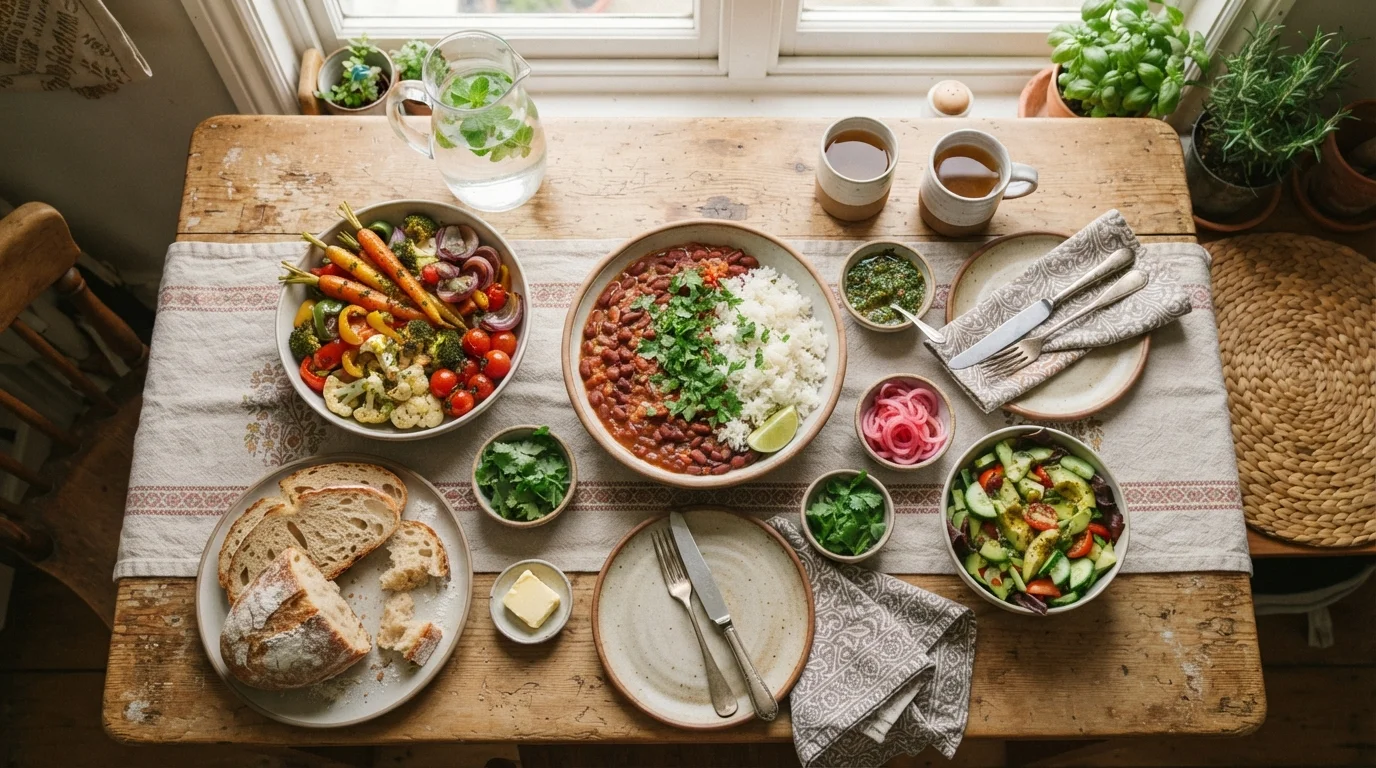
Nutrient density measures how many vitamins, minerals, and macronutrients a food delivers per calorie and per dollar. Dried black beans cost roughly $1.50 per pound and provide substantial protein, fiber, folate, and iron. A dozen eggs typically runs under $3 and supplies complete protein, B vitamins, and choline. Oats offer soluble fiber and complex carbohydrates at pennies per serving. Rice and beans together form a complete protein profile at a cost that few other meals can match. Expensive food is not the same as nutritious food.
Myth
Fresh produce is always healthier than frozen or canned, so buying cheap frozen vegetables means settling for less nutrition.
Fact
Frozen vegetables are typically harvested at peak ripeness and frozen within hours, which preserves most water-soluble vitamins as well as or better than produce that sat in transit.
Fresh produce begins losing certain nutrients, particularly vitamin C and some B vitamins, from the moment it is harvested. Produce shipped across the country and held in store displays for several days may have lower vitamin content than a frozen alternative processed the same day it was picked. Canned vegetables follow a similar logic, though some water-soluble vitamins do leach into the liquid during processing. Using that liquid in soups and sauces recovers much of what would otherwise be lost. Staying healthy on a tight budget leans on this kind of substitution heavily.
Myth
Cooking from scratch on a budget takes too much time for busy families.
Fact
Most genuinely affordable meals, such as soups, stews, stir-fries, and grain bowls, come together in 30 to 45 minutes with basic technique and a few core ingredients.
The meals that reliably cost the least per serving, including lentil soup, fried rice, bean tacos, pasta with canned tomatoes, and vegetable stir-fry, are not slow or technically demanding. They rely on high heat, good seasoning, and pantry staples rather than time-consuming prep. Batch cooking on one weekend afternoon can cover three or four weeknight dinners, reducing both time and per-meal cost further. The idea that cheap cooking is labor-intensive often comes from conflating it with elaborate from-scratch baking or multi-day braises, which are neither necessary nor typical.
Myth
Buying in bulk always saves money and is the smartest approach for budget families.
Fact
Bulk buying saves money only when a family uses the full quantity before it spoils or goes stale; waste erases any savings and often adds a net cost.
Buying a 10-pound bag of potatoes at a lower per-pound price is a clear win if the household eats potatoes regularly and has storage space. Buying the same bag and throwing out half because it sprouted means paying more than if you had bought a smaller quantity. The same logic applies to bulk grains, cooking oils, and spices. Fresh bulk produce without a concrete meal plan behind it is a common source of household food waste. Grocery shopping habits that quietly drain food budgets often include bulk purchases with no follow-through plan.
Myth
Budget meals are inherently bland and nobody at the table will want to eat them.
Fact
Flavor comes from technique and seasoning, not from ingredient cost; a well-seasoned lentil dish or a properly caramelized onion soup can outperform a mediocre expensive meal.
Salt, acid, fat, and heat are the four basic tools of flavor. None of them require expensive ingredients. A splash of vinegar or citrus juice brightens a dish. Toasting dry spices in oil before adding other ingredients releases aromatic compounds that dramatically deepen flavor. Building a base of sauteed onion, garlic, and celery before adding cheap protein or legumes follows the same principle that professional cooks use regardless of budget. The assumption that budget food tastes bad is largely a product of under-seasoned or under-cooked cheap ingredients, not the ingredients themselves.
What the evidence actually supports
The gap between perceived cost and actual nutrition is wider than most people expect. Dried lentils, canned sardines, cabbage, oats, and eggs consistently appear near the top of cost-per-nutrient comparisons across food science literature. None of them require elaborate preparation or specialty stores.
Flavor is a separate concern from cost. A well-stocked spice shelf and a few core aromatics do more for a cheap meal than any expensive protein. Garlic, onion, cumin, smoked paprika, and bay leaves cost very little per use and transform base ingredients into something worth eating.
Families who want a fuller picture of how spending habits interact with nutrition can also look at nutrition myths that lead families to overspend. The overlap between food myths and grocery spending is significant, and understanding both sides makes it easier to shop and cook with confidence.
$1.50
Approximate cost per pound of dried lentils
Dried lentils provide roughly 18 grams of protein and 15 grams of fiber per cooked cup, making them one of the highest-value staples at mainstream US grocery stores.
30-40%
Share of US household food that goes to waste
The USDA has estimated that American households discard between 30 and 40 percent of the food supply, meaning waste, not food prices, often drives the biggest budget losses.
For anyone working through a tighter grocery budget systematically, evidence-backed principles for grocery spending on a tight budget give a practical framework that goes beyond simply buying the cheapest item on the shelf.