
Why meal planning works for busy families
Meal planning is not a lifestyle overhaul. It is writing down what you plan to cook before you shop. That one step changes how you buy food, how much you waste, and how much you spend.
Families that skip planning often end up buying food with no clear purpose. Ingredients sit in the fridge, go unused, and get thrown out. According to the USDA, American households discard a significant portion of the food they purchase, and much of that loss happens at home. Planning meals before each shopping trip makes it far easier to buy only what you will actually use.
The financial side is straightforward. When you know what five or six dinners will look like, you can shop for exactly those ingredients rather than browsing and improvising. That shift alone tends to shrink the grocery bill and cut down on last-minute takeout orders when the fridge turns out to be full of odds and ends that do not add up to a meal.
For more on household budgeting beyond the kitchen, the Family Finance beginner's roadmap covers income tracking, spending categories, and savings goals in plain language.
How to build your first weekly dinner plan
Start with a blank week: Sunday through Saturday, or whichever seven-day span matches your shopping schedule. Write down five or six dinner slots. Leave one or two nights open for leftovers or nights when cooking is not realistic.
Choose meals from a short list of recipes your family already eats and likes. This is not the time to experiment. Familiar recipes mean you know the ingredients, the cook time, and whether anyone will complain. Once the habit is established, adding new meals is easy.
Think about the week ahead when assigning meals to nights. A dish that takes 45 minutes belongs on a Saturday, not on a Tuesday when two kids have after-school activities. Quick meals, sheet pan dinners, and slow cooker recipes work better on busy nights.
Proteins that stretch across multiple meals are worth building around. Ground beef, for example, can become tacos one night and a pasta sauce two nights later. The guide to stretching one pound of ground beef shows six different dinners built from a single pound. Similarly, rice and beans remain one of the most cost-effective combinations you can plan around.
Plan meals you already know how to make
Your first meal plan should rely entirely on recipes your family already eats. Familiar meals mean faster cooking, fewer mistakes, and less food waste. Once the weekly planning habit feels natural, adding one new recipe every few weeks is a low-risk way to expand your rotation without disrupting the routine.
Keeping costs down while planning
The most direct way to control grocery spending is to build your plan around ingredients that cost less per serving. Whole grains, dried or canned legumes, eggs, and seasonal produce are reliable low-cost options at most US grocery stores.
Before writing the week's plan, check what is already in the pantry and freezer. Planning meals around what you already have prevents buying duplicates and uses up items before they expire. This is also where freezer cooking connects to meal planning: preparing larger batches and freezing portions means future weeks cost less because part of dinner is already done.
Adding more produce does not have to raise costs. Frozen and canned vegetables cost less than fresh and last longer, which means less waste. The article on eating more vegetables without overhauling your grocery budget covers practical ways to work more produce into family meals at reasonable prices.
Once your plan is written, use it to build a focused shopping list. The weekly grocery planning checklist walks through each step of a smarter grocery trip, from checking the pantry to organizing the list by store section.
Reducing waste and using what you have
Food waste is a direct cost. When produce or leftovers go in the trash, that is money already spent with nothing to show for it. Meal planning reduces waste by giving every ingredient a purpose before it enters the house.
A few practical habits help. Plan at least one meal per week that uses up whatever fresh produce needs to be eaten soon. Soups, stir-fries, and grain bowls are good vehicles because they work with nearly any vegetable combination. Keep a running list of what is in the fridge so nothing gets pushed to the back and forgotten.
Leftovers belong in the plan, not in the back of the fridge. If Monday is a roast chicken, Tuesday can be chicken tacos or a quick chicken soup. Treating leftovers as planned meals rather than afterthoughts reduces both waste and cooking time.
Growing some of your own produce is another way to cut costs over time. The family vegetable garden guide is a good starting point for first-time food gardeners.
Making meal planning a habit
The first week of planning is always the hardest because nothing is set up yet. The goal is to repeat the process enough times that it becomes automatic rather than effortful.
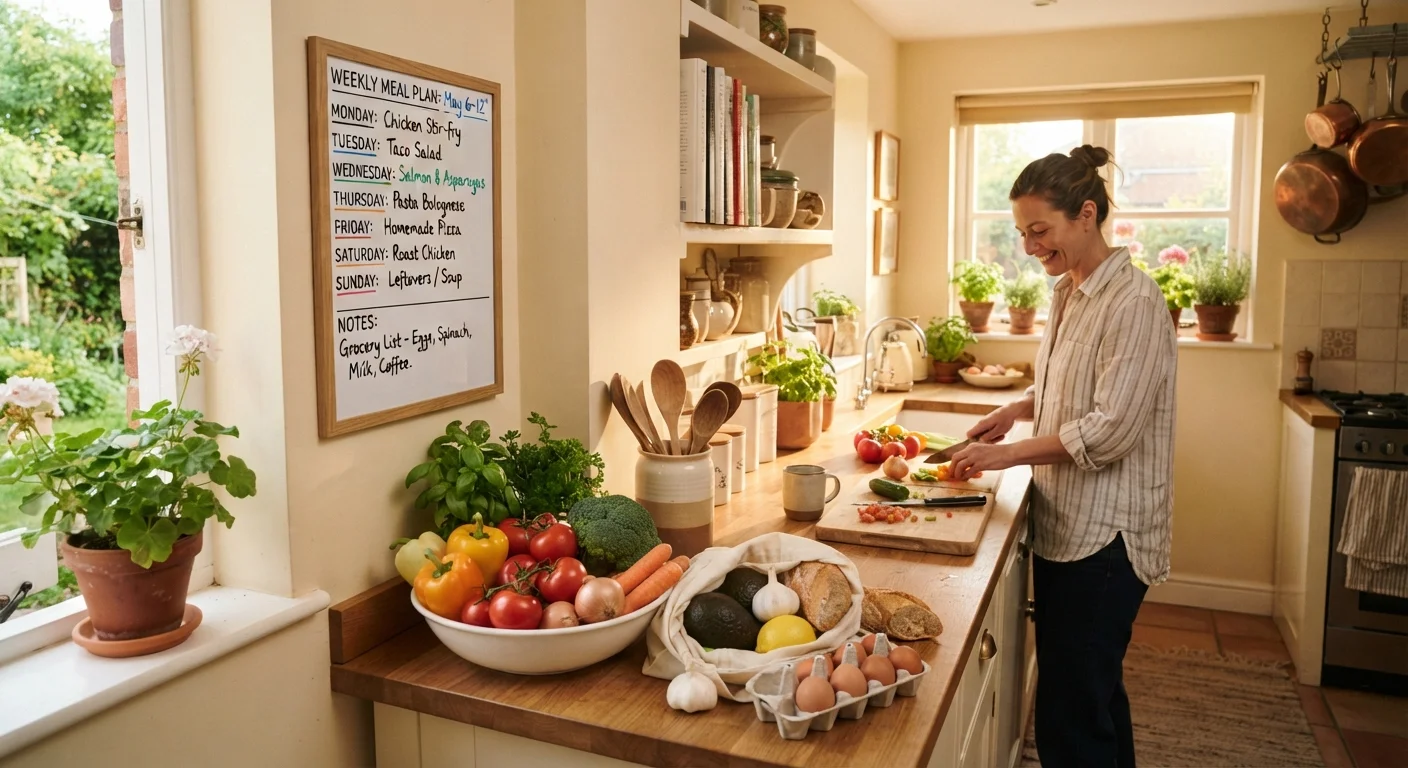
Pick one consistent day and time each week to write the plan. Many families do this on Saturday or Sunday before shopping. Fifteen to twenty minutes is enough once you have a working recipe rotation. Write the plan somewhere the whole household can see it, a whiteboard, the refrigerator, or a shared note on a phone.
Build a core rotation of eight to ten dinners that your family eats reliably. Cycling through that list means you rarely have to think hard about what to cook. New meals can be added gradually when there is time and interest, but the rotation is what makes planning sustainable week after week.
If a week goes sideways and the plan falls apart, start fresh the following week. One skipped week does not erase the savings from weeks that worked. The financial and practical benefits of meal planning come from the pattern over months, not from any single perfect week.