
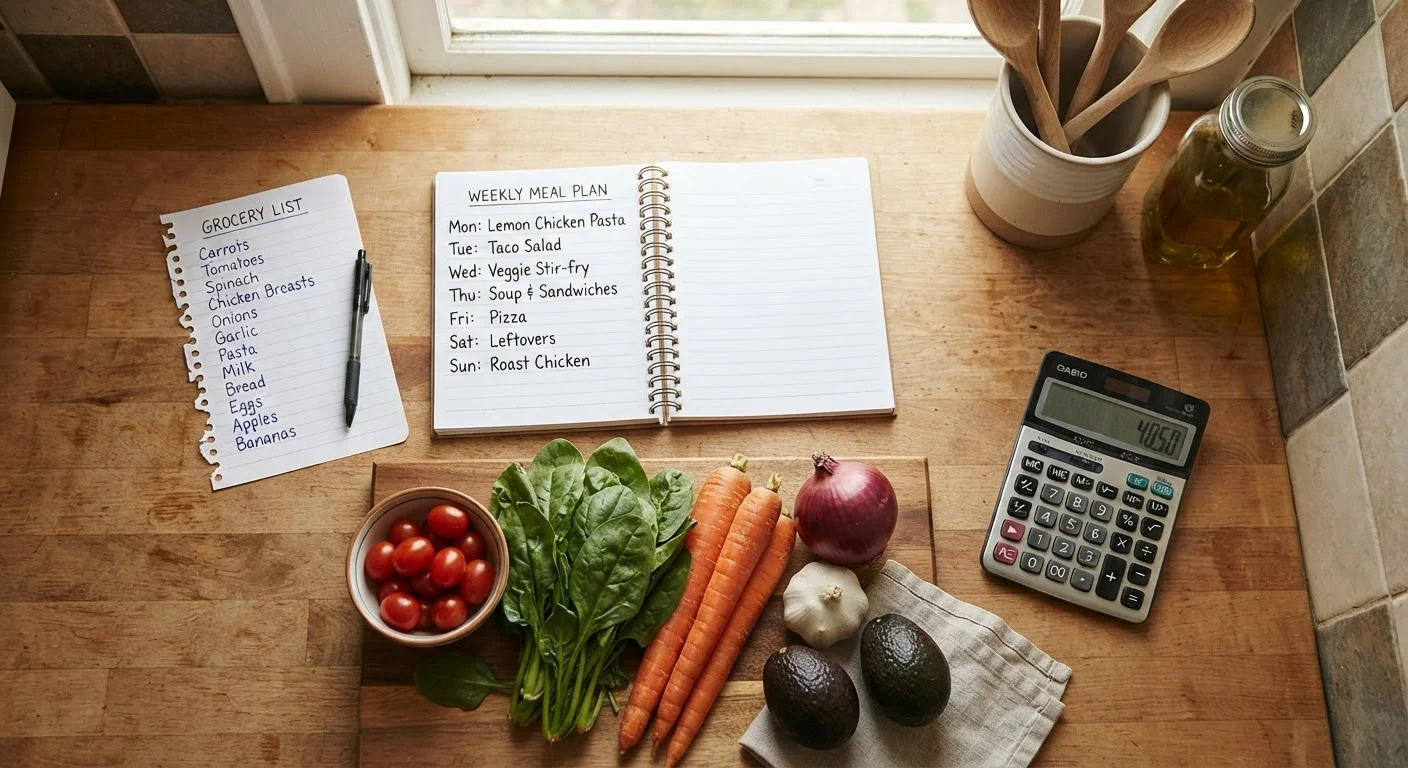
Why a planning checklist changes what you spend
Most grocery overspending happens before you ever reach the store. Skipping a fridge check means buying a second block of cheese you did not need. Skipping a meal plan means grabbing whatever looks convenient in the moment, usually at a higher per-serving cost. This checklist addresses those gaps by building a short but complete routine you run through at home, before the trip.
The steps below are grouped the way the planning actually flows: starting with what you already have, moving through what you need, and ending with how to shop once you get there. If you are newer to meal planning in general, the starter guide for busy families covers the underlying strategy in more detail. This checklist assumes you are ready to put that strategy into weekly practice.
Inventory check
Meal planning
Budget setting
List building
Pre-trip habits
In-store discipline
Post-trip wrap-up
Tools that make the routine faster
You do not need much to work through this checklist, but having the right things handy keeps the process from stretching into a 45-minute project.
Grocery list app or notepad
Holds your organized, section-by-section shopping list so nothing gets forgotten and you can move through the store efficiently.
Store weekly circular (print or digital)
Shows price drops for the current week so you can adjust your list to pick up items already planned at a lower cost.
Calculator or phone
Lets you run a running total while shopping and compare unit prices between package sizes.
Reusable shopping bags
Avoids per-bag fees at stores that charge for plastic bags, which can add up across a full year of weekly trips.
Meal plan written out for the week
Gives every item on your grocery list a specific purpose, reducing unplanned purchases and food that goes unused.
One habit worth building early: whenever you finish a pantry staple, write it down immediately rather than trusting your memory. Keeping a running list on the fridge or in a notes app means your pre-trip inventory step takes two minutes instead of fifteen. For ideas on which staples to keep stocked consistently, the pantry staples guide for budget cooking is a practical reference.
Getting the most from your list at the store
A complete list built at home only works if you actually use it in the store. The two biggest list-defeating behaviors are adding items on impulse and skipping unit price comparisons on categories where store brands genuinely save money. Research into household grocery patterns consistently shows that shoppers without a list spend measurably more per trip, and the gap widens in larger stores with more promotional displays.
Organize your list by store section (produce, dairy, dry goods, frozen) so you move through the store once rather than backtracking. Backtracking exposes you to more displays and extends your time in the store, both of which tend to add items to the cart. If you want a data-backed look at which store-brand swaps actually pay off, the store brand vs. name brand comparison breaks it down by category.
Sales can work against your budget
Buying something on sale only saves money if you were already going to buy it. Building your meal plan around what is on sale this week is a sound strategy. Buying extra of a sale item you have no plan for often leads to waste, not savings. Keep promotions in a supporting role, not the driver of what goes on your list.
Households that track spending across grocery trips sometimes find patterns that are invisible week to week. A broader look at where household money goes, including food, is the kind of thing the household spending audit is built for.