
How much do store brands actually save?
The price gap between store brands and name brands is consistent enough to matter over a month of grocery shopping. Consumer price data collected by the Private Label Manufacturers Association has shown store brands average 20 to 30 percent less than comparable name brand items, though the gap varies by category and retailer. On a $200 weekly grocery bill, even a 20 percent reduction in half your purchases adds up to $20 a week, or roughly $1,000 a year.
That math works when the store-brand product is genuinely comparable. It stops working when a family buys the store brand, dislikes it, and tosses it or buys the name brand anyway. Wasted food and duplicate purchases erase the savings. The real question is which categories are safe swaps and which carry more risk of disappointment. See our overview of grocery spending principles for how this fits into a broader budget strategy.
| Category | Store brand | Name brand | |
|---|---|---|---|
| All-purpose flour, sugar, salt | Reliable, identical use | Higher cost, same result | |
| Canned beans, tomatoes, corn | Consistent quality | Minimal quality advantage | |
| Frozen vegetables | Comparable nutrition and taste | Often no real difference | |
| Shredded cheese, butter, eggs | Works well for cooking | Worth it only for strong preference | |
| Breakfast cereal and snacks | Hit or miss by household | Strong flavor/texture familiarity | |
| Carbonated beverages | Lower cost, noticeable taste gap | Strong brand loyalty common |
Categories where store brands hold up well
Pantry staples are the most reliable starting point. All-purpose flour, granulated sugar, baking powder, salt, dried pasta, white rice, and rolled oats are produced to consistent standards. The ingredient lists are nearly identical across brands, and most home cooks cannot tell the difference in a finished dish. Canned tomatoes, canned beans, and canned corn fall into the same reliable zone.
Dairy basics, including store-brand butter, shredded cheese, sour cream, and plain yogurt, also perform well for cooking and baking. Eggs are another category where the store brand almost always delivers the same product. Frozen vegetables are a strong swap too: individually quick-frozen produce from a store label often has the same nutritional profile as name-brand bags because the vegetable itself, not the brand, determines quality.
Condiments like ketchup and yellow mustard are worth testing. Many households find no meaningful difference. Building a budget-friendly pantry becomes easier once you know which of these swaps stick in your household.
Categories where the swap is riskier
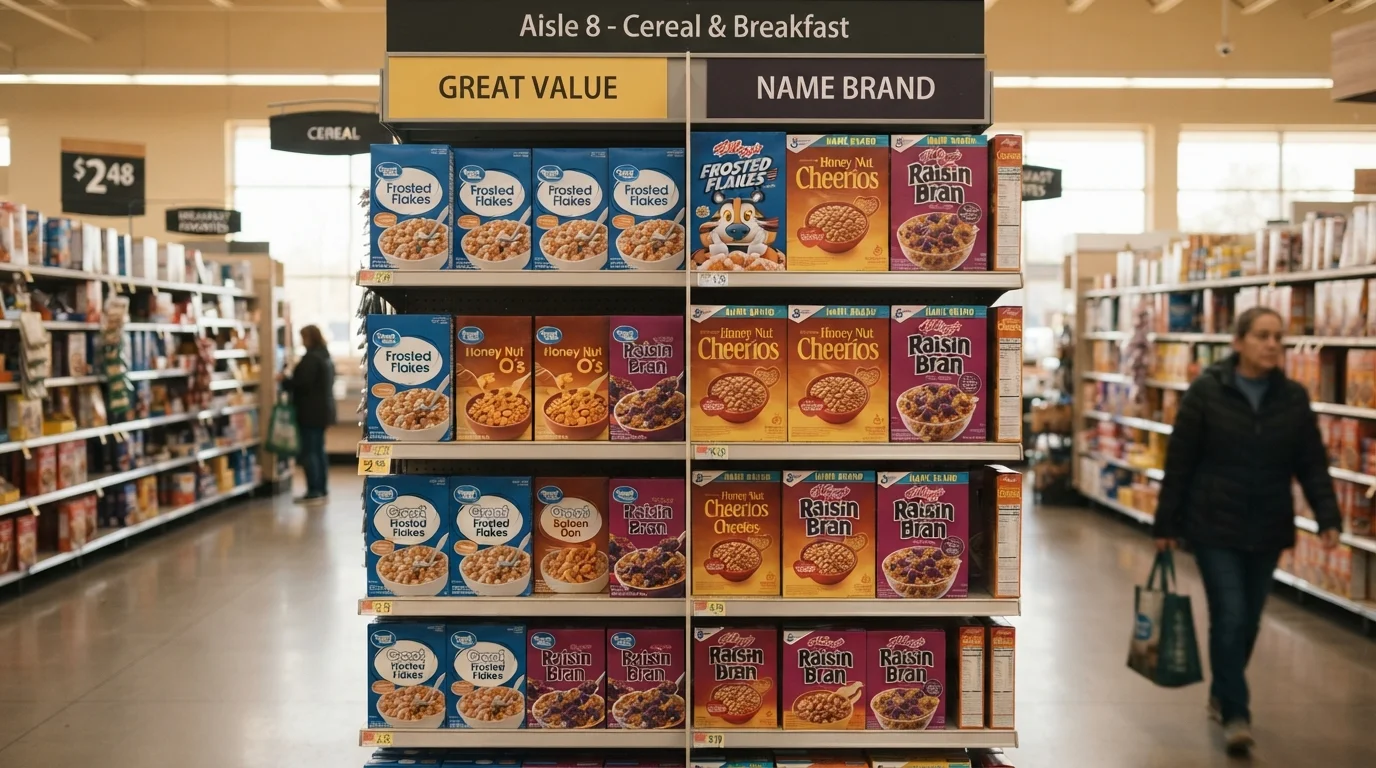
Snack foods and breakfast cereals are the most common disappointment. Texture, sweetness level, and flavor formulas vary enough between name brand and store brand that many family members notice immediately, particularly children with strong brand familiarity. Buying a large box of a rejected cereal is not a saving.
Carbonated beverages are similar. Store-brand cola or sparkling water is almost always cheaper, but household members with a strong preference for a specific brand will not be satisfied with the substitute. If the name-brand item ends up purchased anyway, there was no net saving.
Certain over-the-counter medications in the grocery aisle, such as pain relievers or antacids, are worth noting separately: when the active ingredient and dosage are identical and confirmed on the label, the store brand is typically the same product at a lower price. However, always read labels carefully and consult a pharmacist or healthcare provider for any medication questions rather than relying on packaging comparisons alone.
Watch out for the waste trap
Buying a store-brand item your household rejects creates two costs: the discarded product and the replacement name-brand purchase. This is especially common with snacks, cereals, and beverages when kids are involved. Test new swaps in small quantities first. A single-serve or small package costs more per ounce but limits the loss if it does not work out.
A practical approach for your household
The most effective method is to swap one item per shopping trip rather than switching an entire cart at once. Buy the store-brand version of one product your family uses regularly. If no one objects within a week, that swap stays. If someone pushes back, you have not lost much.
Keep a simple mental note or a list on your phone of confirmed swaps. Over two or three months, most households identify 10 to 15 items that work without complaint. Those items typically cover a large share of the pantry and produce meaningful monthly savings without friction.
A structured pre-trip checklist can help you apply those confirmed swaps consistently each week. And if you want to look at the broader shopping habits that affect the total bill, these common patterns are worth reviewing alongside your brand decisions.