
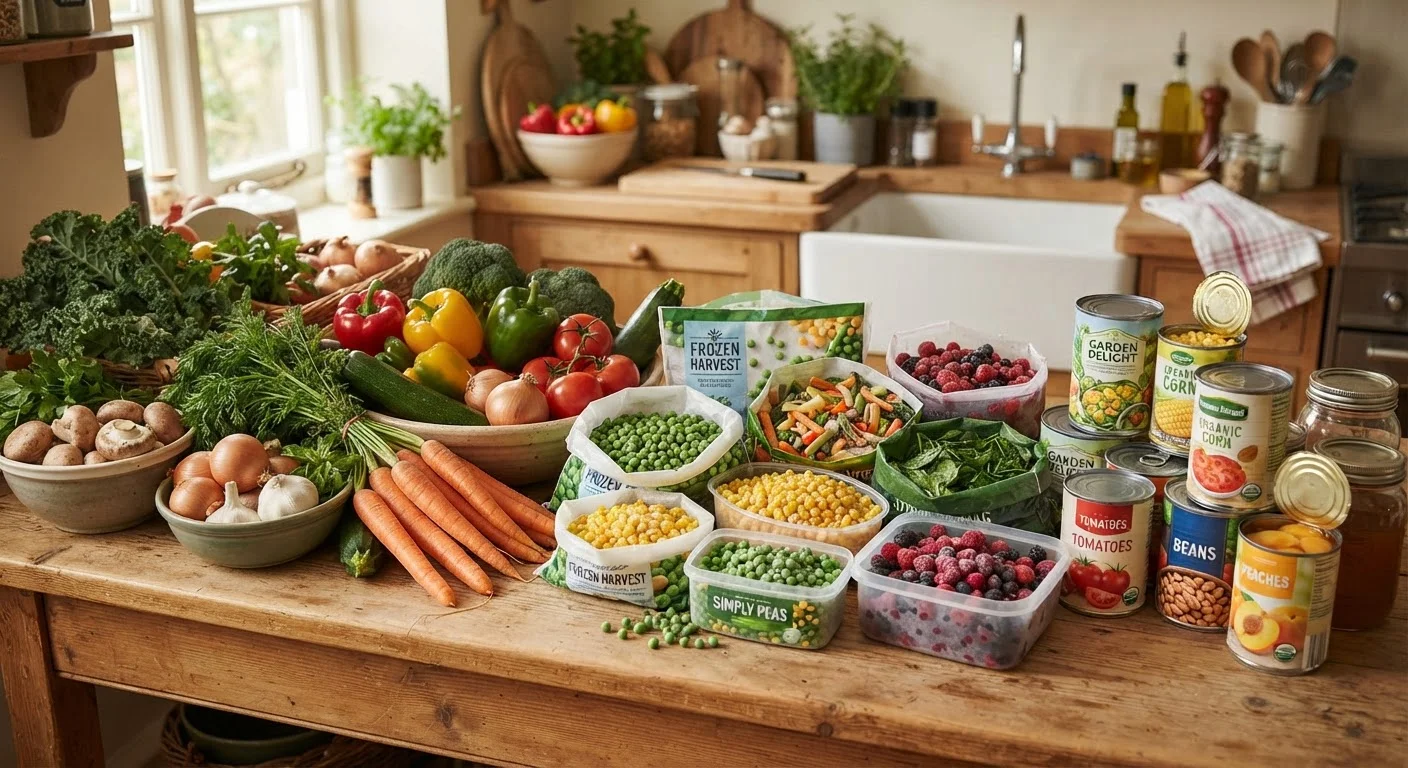
Why vegetables don't have to be expensive
Many families assume eating more vegetables means paying more at the grocery store. That assumption does not hold up across the full produce section. Frozen spinach, canned diced tomatoes, and dried lentils cost a fraction of what fresh specialty produce does, and they carry solid nutritional profiles. The US Department of Agriculture's MyPlate guidance makes no distinction between fresh, frozen, and canned vegetables when counting toward recommended intake, provided canned varieties are low in added sodium.
The real cost driver is usually variety and form, not vegetables as a category. A bag of frozen peas or a can of black beans often costs less per serving than a single bag of chips. Shifting even a small part of the weekly food budget toward these options adds vegetables without strain. For more on keeping grocery spending under control overall, see principles for grocery spending on a tight budget.
Practical ways to add more vegetables to everyday meals
Add a frozen or canned vegetable to at least one dish you already cook each week.
Attaching a new habit to an existing routine makes it stick. Families do not need to adopt unfamiliar recipes; they need to expand what is already working. A can of diced tomatoes in chili or a handful of frozen peas stirred into pasta adds nutrition with almost no effort.
Buy in-season produce and plan meals around what is cheapest that week.
Produce prices shift with the season. Building the week's vegetable choices around what is inexpensive rather than what a recipe specifies can cut costs without reducing variety. This approach also reduces dependence on a fixed shopping list, which tends to miss price fluctuations.
Batch-prepare a simple vegetable side at the start of the week.
A pan of roasted vegetables or a pot of cooked greens prepared on Sunday can be reused across multiple meals. This reduces the friction of cooking vegetables from scratch on busy weeknights, which is a common reason families skip them.
Use vegetables to stretch protein portions rather than replacing them.
Families often resist vegetable-heavy meals if they feel like something is missing. Adding vegetables alongside protein, rather than instead of it, meets everyone at the table and quietly reduces the per-meal cost of the protein-heavy component. This is the same logic behind stretching a pound of ground beef across multiple dinners.
Keep a short list of vegetables every family member will actually eat.
Buying a wide variety of produce in hopes of expanding tastes often leads to waste when those items go uneaten. Starting with reliable favorites, then introducing one new vegetable at a time, reduces both wasted food and wasted money.
None of these approaches require a separate shopping trip or a new recipe collection. They work inside meals the family already eats, which makes them easier to sustain. If you want more structure around shopping and prep, the weekly grocery planning checklist walks through how to build vegetable choices into your routine before you reach the store.
Making the most of frozen and canned options
Frozen vegetables are picked at peak ripeness and frozen quickly, which preserves most vitamins and minerals. They also eliminate the waste problem that affects fresh produce: a bag of frozen broccoli does not go limp in the crisper drawer. That waste reduction matters for the budget. The USDA Economic Research Service has documented that American households discard a significant share of the fresh produce they buy, which effectively raises the per-serving cost of fresh vegetables.
Canned vegetables are similarly durable and affordable. Draining and rinsing canned beans or corn removes a portion of added sodium. Choosing no-salt-added or low-sodium varieties where available reduces that concern further. Canned tomatoes, chickpeas, and kidney beans are particularly versatile and inexpensive. Paired with pantry staples, they form the base of many low-cost meals. See pantry staples that make budget cooking taste good for ideas on building around them.
Rinsing canned vegetables reduces sodium
Draining and rinsing canned beans, corn, or other vegetables under cold water for about 30 seconds can remove a meaningful portion of added sodium. This simple step makes canned vegetables a more suitable option for people watching their salt intake. No-salt-added varieties are available at most grocery stores and work the same way in recipes.
Seasonal and local produce: when fresh makes sense
Fresh vegetables are not off the table. They become genuinely affordable when bought in season. Zucchini in July, sweet potatoes in October, and cabbage through much of the fall and winter cost less and taste better than their out-of-season counterparts shipped from far away. Farmers markets sometimes offer end-of-day discounts on produce that needs to be used quickly, which suits families willing to cook that evening or freeze portions for later.
Growing even a small number of vegetables at home can extend the budget further. Herbs, cherry tomatoes, and salad greens are among the easiest crops for first-time gardeners and require minimal space. A container on a balcony or a small raised bed can produce enough to reduce fresh herb and salad spending noticeably. The family guide to starting a vegetable garden covers exactly how to begin without much prior experience. For batch-prepping and storing seasonal produce when prices are low, freezer cooking is a reliable method.
This article is for general informational purposes only and is not medical or dietary advice. Consult a qualified healthcare professional or registered dietitian for guidance specific to your health needs or those of your family members.