
Choosing the right spot
Sun is non-negotiable. Vegetables need at least 6 hours of direct sunlight daily; 8 hours produces better yields. Walk your yard at midday and note where shadows fall from trees, fences, or the house. The sunniest patch, even if it is not the most convenient location, is the right starting point.
After sun, consider water access. A garden more than 50 feet from a hose connection is harder to maintain consistently. Flat or gently sloping ground drains well without washing soil away. Avoid low-lying spots that collect standing water after rain.
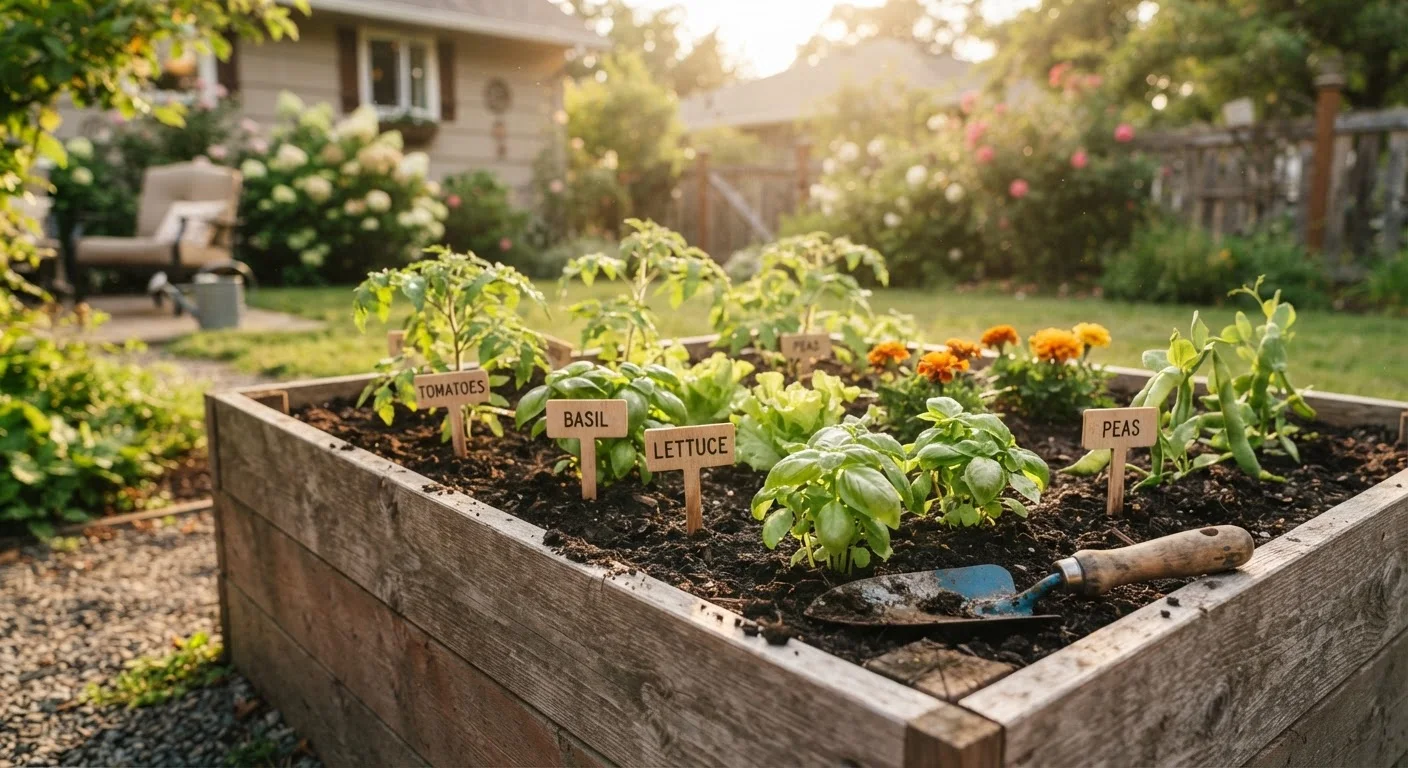
Ground beds and raised beds are the two main options. A ground bed costs almost nothing to set up but requires more soil preparation. A raised bed built from rot-resistant lumber (such as cedar) gives you full control over soil quality from day one and drains well, though materials add upfront cost. Either works for a first garden.
If outdoor space is limited, containers on a sunny deck or balcony can support tomatoes, herbs, peppers, and greens. Use containers at least 12 inches deep for most vegetables and 18 inches deep for tomatoes.
Test your sun before you dig
Before committing to a location, set a timer and check the same spot every 2 hours from 8 a.m. to 6 p.m. on a clear day. Count only the hours of direct, unobstructed sun. This takes one afternoon and saves months of frustration from planting in a shady spot.
Picking your first crops
Choose crops that match your climate and your family's eating habits. There is little point growing something nobody wants to eat.
Fast-growing crops give beginners early feedback. Radishes mature in 25 to 30 days. Lettuce and spinach are ready to cut in 4 to 6 weeks. Bush beans produce pods about 50 to 55 days after sowing. These short timelines mean a mistake early in the season still leaves time to replant.
Productive crops per square foot include: cherry tomatoes, zucchini, cucumbers, and kale. Tomatoes take longer to fruit but are high-value because fresh tomatoes cost more at the store than most other vegetables. Zucchini is extremely prolific, sometimes producing more than a small family can eat.
Avoid crops with long growing seasons or complex needs in your first year. Corn requires a large block planting to pollinate properly. Melons need significant space and a long warm season. Broccoli and cauliflower are sensitive to temperature swings.
Pairing your garden with a weekly meal plan makes the harvest more useful. See the starter guide to meal planning for families for ideas on working fresh produce into a weekly dinner rotation.
Building healthy soil from the start
Soil is the foundation of every successful vegetable garden. Adding compost before planting does more to improve plant health than any fertilizer applied later in the season.
For a ground bed, loosen the soil to a depth of 12 inches using a garden fork. Remove rocks and large clumps, then mix in 3 to 4 inches of compost, working it into the top 6 to 8 inches of soil. This improves drainage in clay-heavy soil and helps sandy soil retain moisture.
For a raised bed, a common starting mix is one-third compost, one-third coarse material such as aged wood chips or perlite, and one-third topsoil. This combination drains well and holds nutrients without compacting.
Direct sowing
Planting seeds directly into garden soil rather than starting them indoors first. Used for crops that grow quickly or do not transplant well.
Hardening off
Gradually exposing indoor seedlings to outdoor conditions over 7 to 10 days before planting them in the ground. This reduces the shock plants experience from the transition.
Compost
Decomposed organic material like food scraps and yard waste. Mixed into soil, it adds nutrients and improves both drainage and moisture retention.
Soil pH
A measure of how acidic or alkaline your soil is, on a scale from 0 to 14. Most vegetables grow best when pH falls between 6.0 and 7.0.
Open-pollinated variety
A plant variety pollinated naturally, so seeds saved from the fruit will grow into plants with the same traits as the parent.
USDA hardiness zone
A geographic classification based on average minimum winter temperatures that helps gardeners know which plants survive in their area and when to plant.
Soil pH matters more than most beginners expect. Most vegetables grow well between a pH of 6.0 and 7.0. Inexpensive test kits from garden centers can tell you where your soil stands. If pH is below 6.0, adding agricultural lime raises it. If pH is above 7.0, sulfur or additional compost can lower it.
Planting, watering, and keeping plants alive
Direct sowing means placing seeds straight into garden soil. It works well for root vegetables like carrots and radishes, which do not transplant cleanly, and for fast crops like beans and peas. Follow seed packet spacing instructions. Crowded plants compete for nutrients and air circulation, which increases disease risk.
Transplanting from seedlings (small plants started indoors or purchased from a nursery) gives tomatoes, peppers, and eggplant a head start in short-season climates. Harden off transplants by setting them outside in a sheltered spot for a few hours each day over 7 to 10 days before planting them in the ground. This gradual exposure reduces transplant shock.
Water at the base of plants rather than overhead. Wet leaves encourage fungal disease. Most vegetables do well with about 1 inch of water per week from rain or irrigation. In dry, hot weather, check soil moisture at a depth of 2 to 3 inches; if it is dry there, water thoroughly.
A 2- to 3-inch layer of mulch around plants, such as straw or wood chips, slows moisture loss and suppresses weeds. Weeds compete directly with vegetables for water and nutrients, so controlling them early saves effort later in the season.
Common plant care mistakes such as overwatering and poor drainage apply to vegetable gardens too, not just houseplants.
Staying on budget as you grow
A vegetable garden does not need to be expensive. Seed packets typically cost far less per plant than nursery transplants, so direct-sowing where crops allow lowers startup costs considerably.
Compost is free to make at home using kitchen scraps (vegetable peels, coffee grounds, eggshells) and yard waste (dry leaves, grass clippings). A simple compost bin requires no special equipment. It takes several months to produce finished compost, so starting a pile now prepares resources for next season.
Saving seeds from open-pollinated varieties at the end of the season cuts the following year's seed spending. Tomatoes, peppers, beans, and squash all produce seeds that can be dried and stored. Note that seeds from hybrid varieties may not grow true to the parent plant.
Track what the garden produces and compare it to grocery costs for the same items. Families who grow high-value crops like cherry tomatoes, fresh herbs, and salad greens typically see the clearest return on their time and investment. For broader household cost management, the beginner's roadmap to managing household money covers how to fit variable expenses like gardening supplies into a monthly budget.
Start with one bed or one container. Expand in future seasons based on what worked, what your family actually ate, and how much time you can commit.