
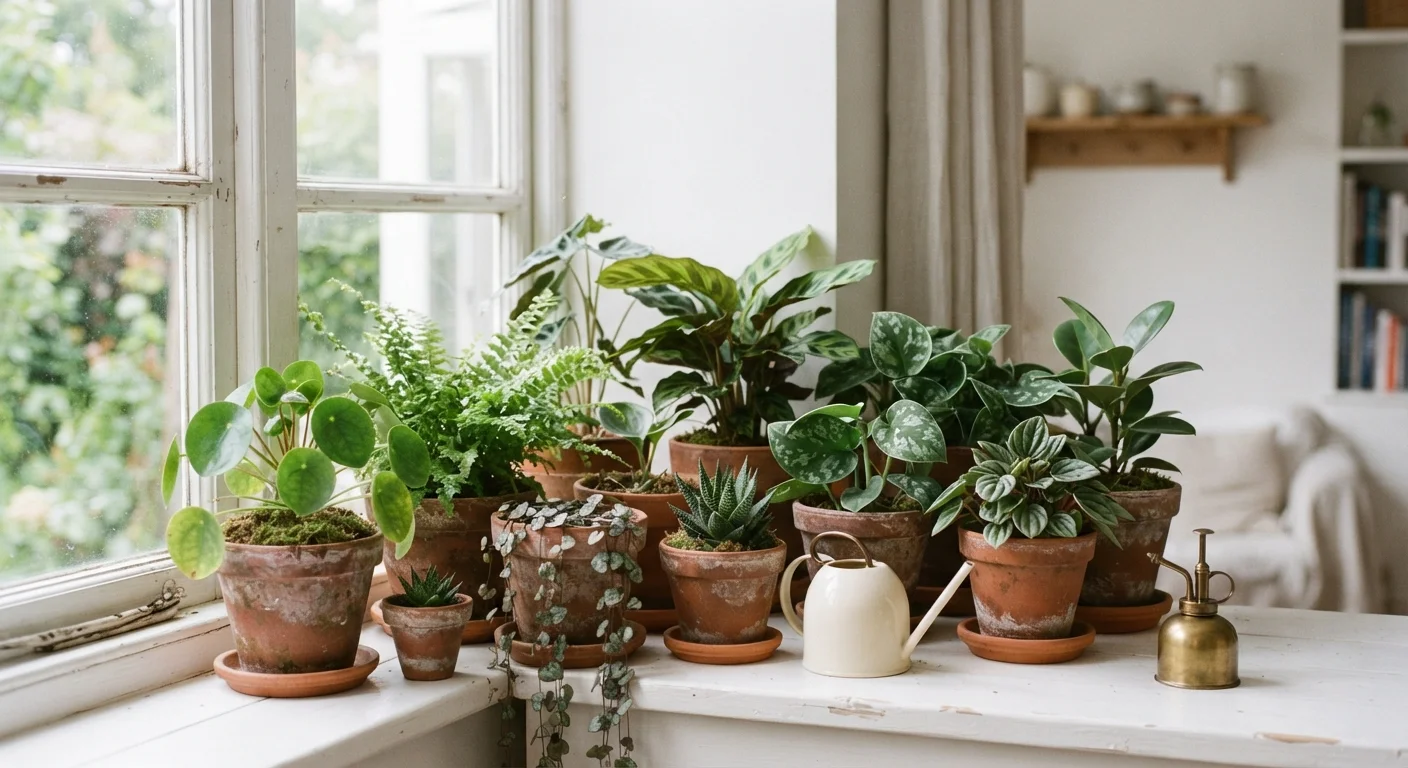
Why houseplants fail more often than they should
Houseplants die in predictable ways. The same handful of errors show up again and again, regardless of plant type or home environment. Most of them are not about bad luck or difficult species. They trace back to misunderstandings about water, light, and containers that are straightforward to fix once identified.
If you have ever lost a pothos, a peace lily, or a snake plant, any of the most forgiving species available, there is almost certainly one of these mistakes behind it. The good news is that catching a problem early usually means the plant can recover fully without replacing it or spending money on treatments.
For those who also garden outdoors, many of these principles carry over. The family vegetable garden guide covers soil health and watering habits that apply equally well when moving plants indoors.
Watering on a fixed schedule regardless of soil condition.
Why it happens: Most care instructions say 'water once a week,' which sounds precise but ignores seasonal changes, pot size, humidity, and plant size.
Placing plants in spots that look bright but receive no direct or indirect light.
Why it happens: Rooms feel bright to human eyes because eyes adapt quickly. A spot four feet from a window can receive less than a tenth of the light intensity at the glass.
Using a pot that is too large in the hope the plant will grow into it.
Why it happens: Bigger pots seem like a generous choice and reduce the need to repot soon, so the logic feels sound.
Using a decorative pot or cache pot without drainage holes.
Why it happens: Many attractive pots sold for indoor use have no drainage hole, and removing plants from decorative sleeves feels inconvenient.
Fertilizing a stressed or newly repotted plant.
Why it happens: A plant that looks unhealthy prompts the instinct to feed it, and fertilizer bags often suggest frequent application.
Ignoring humidity needs for tropical plants kept in heated or air-conditioned rooms.
Why it happens: Indoor temperature stays comfortable, so it is easy to assume the indoor climate is equally suitable for all plants.
Reading your plant before you act
The instinct to water a drooping plant or move a yellowing one into stronger sun is understandable, but acting without diagnosing first often makes things worse. Overwatered roots look identical to underwatered ones to a casual observer, because both cause wilting. Yellowing leaves can mean too much light, too little, a nitrogen shortage, or root rot.
Before changing anything, check the soil two inches down with a finger. Wet soil that smells musty points to overwatering or poor drainage. Bone-dry, cracked soil points to underwatering. Look at the light the plant receives over a full day, not just at the moment you happen to walk by. Check the drainage hole under the pot. These three checks resolve the majority of indoor plant problems without any products or interventions.
Do not flush problems with more water or fertilizer
When a plant declines, adding water or fertilizer before identifying the cause is the most common way to accelerate the damage. Both interventions applied to an already stressed root system can cause chemical burn or deepen root rot. Pause all inputs, diagnose first, then treat the specific problem.
Water management indoors follows the same conservation logic that makes low-water landscaping strategies work outdoors: match water supply to actual plant need rather than a fixed schedule.