
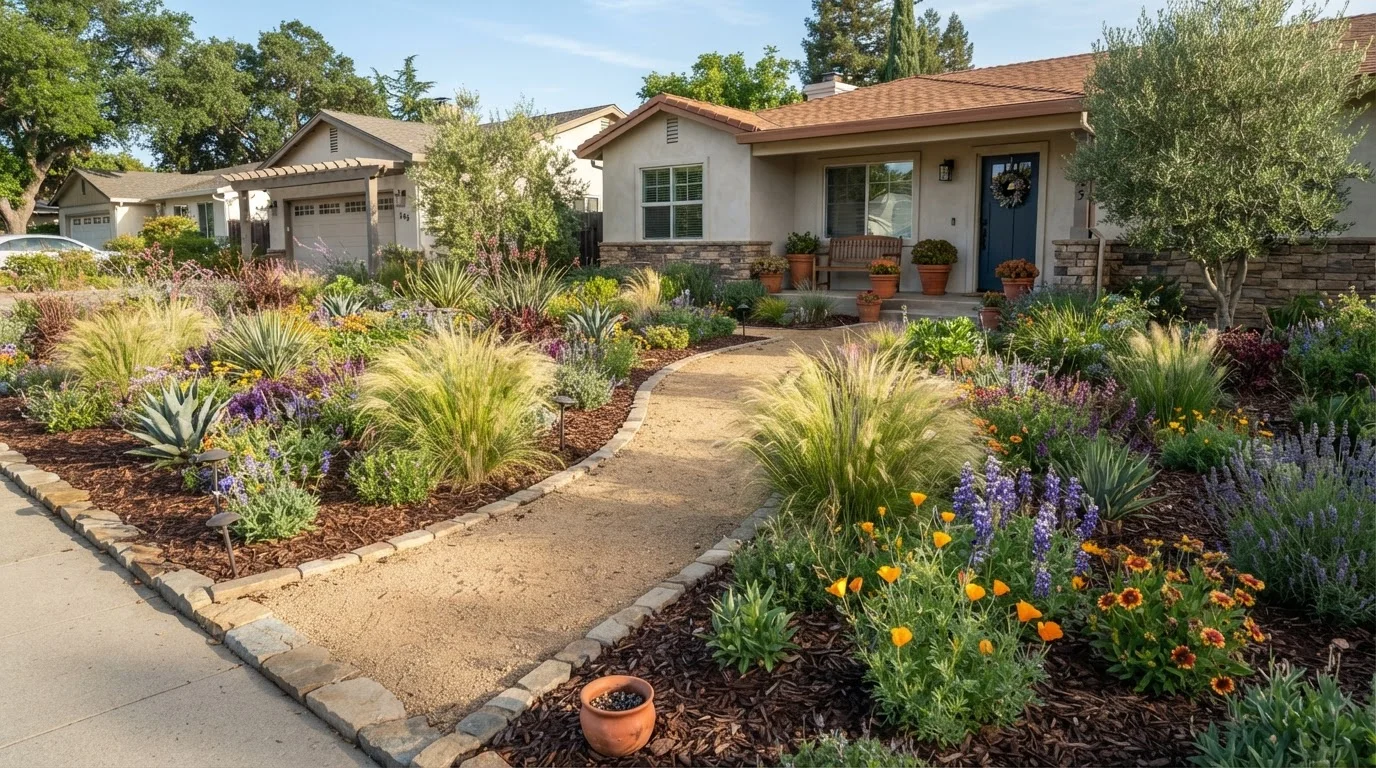
Why low-water landscaping makes practical sense
Outdoor water use accounts for a significant share of household water consumption in many parts of the US, with lawns and gardens drawing heavily during summer months. Reducing that demand does not mean accepting a brown, neglected yard. With the right plant choices and a few design adjustments, a yard can stay attractive through dry spells while requiring less work and less water than a conventional lawn setup.
Families looking to trim utility costs will find that water-efficient landscaping compounds its savings over time. The upfront work of redesigning planting beds or swapping irrigation hardware pays off across many seasons. For a broader look at how outdoor changes connect to household bills, see how to reduce household utility costs.
Group plants by water needs when laying out beds and borders.
Running a single irrigation zone across plants with different requirements wastes water on drought-tolerant species and starves thirsty ones. Hydrozoning lets you dial in each area independently, which cuts total water use and reduces plant stress.
Apply a 2- to 3-inch layer of organic mulch over all planting beds each spring.
Mulch dramatically slows soil evaporation and keeps roots cooler during heat waves. Organic mulch also feeds soil biology as it decomposes, reducing the need for fertilizer over time.
Replace or reduce cool-season turf with native ground covers or permeable hardscape.
Turf grass is among the thirstiest landscape plants in most US regions. Even partial replacement with low-growing natives or gravel with stepping stones cuts irrigation demand and maintenance time.
Switch from overhead sprinklers to drip irrigation or soaker hoses for planting beds.
Drip systems deliver water to the root zone with minimal evaporation loss and reduce wet foliage that can lead to disease. They also tend to discourage weed germination in the spaces between plants.
Choose native and climate-adapted plants for the bulk of new plantings.
Plants matched to local rainfall patterns and soil conditions require little or no supplemental irrigation once established, typically after one to two growing seasons. They also tend to need less fertilizer and are more resistant to local pests.
Plant selection and garden design fundamentals
The most reliable way to lower water demand is to plant species that match your local climate. Native plants, by definition, evolved in your region's rainfall patterns and soil conditions, so they generally thrive with little or no supplemental irrigation once their roots are established. Climate-adapted non-natives with similar drought tolerance can fill gaps where native options are limited.
Hydrozoning is a design principle worth learning early. It means grouping plants that share similar water requirements in the same bed or zone, so you can water each area precisely rather than running a single schedule across the whole yard. A vegetable bed and a native perennial border have very different needs, and treating them separately avoids both overwatering and underwatering.
Reducing or eliminating cool-season turf grass in favor of ground covers, ornamental grasses, or permeable hardscape is one of the most effective structural changes a homeowner can make. Even replacing a portion of a lawn cuts both water demand and mowing time. For more weekend-scale yard improvements, DIY curb appeal projects offer concrete ideas that complement this shift.
Check your local cooperative extension for plant lists
State cooperative extension offices publish free, region-specific lists of drought-tolerant and native plants suited to local soil and climate. These lists are based on trials conducted in your state and are far more reliable than general gardening guides. Search for your state's name plus 'cooperative extension drought tolerant plants' to find the relevant resource.
Mulching, soil prep, and water retention
Bare soil loses moisture quickly through evaporation, and without organic matter it repels water rather than absorbing it. A 2- to 3-inch layer of organic mulch, such as shredded bark, wood chips, or straw, slows evaporation, moderates soil temperature, and gradually improves soil structure as it breaks down. Keep mulch a few inches away from plant stems and tree trunks to avoid rot.
Improving soil before planting pays long-term dividends. Working compost into sandy soils helps them retain moisture longer; adding compost to heavy clay improves drainage so roots get oxygen and water in better balance. Either way, plants establish faster in amended soil and need less frequent irrigation during their first growing season.
Swales, berms, and shallow contoured beds can guide rainwater toward plant roots rather than letting it run off. These are low-cost earthworks that any homeowner comfortable with a shovel can attempt, though steep slopes or large-scale grading may warrant a consultation with a landscape professional.
Irrigation upgrades that actually reduce water use
Conventional overhead sprinklers lose a substantial portion of their output to evaporation, wind drift, and runoff before water ever reaches roots. Drip irrigation and soaker hoses deliver water slowly at ground level, directly to the root zone, which reduces both water volume needed and weed growth in surrounding soil.
A programmable timer or smart irrigation controller adds another layer of efficiency. Smart controllers connect to local weather data and skip scheduled waterings after rain or when soil sensors detect adequate moisture. They are not free, but over multiple seasons the water savings tend to offset the cost for most households.
Watering in the early morning rather than midday or evening is a simple habit change that reduces evaporation loss and limits the moisture on foliage that can encourage fungal problems. Overwatering is one of the most common errors homeowners make, and the same attentiveness that prevents it outdoors applies inside as well. If you grow houseplants, common indoor plant care mistakes covers the same pattern of overwatering in detail.