
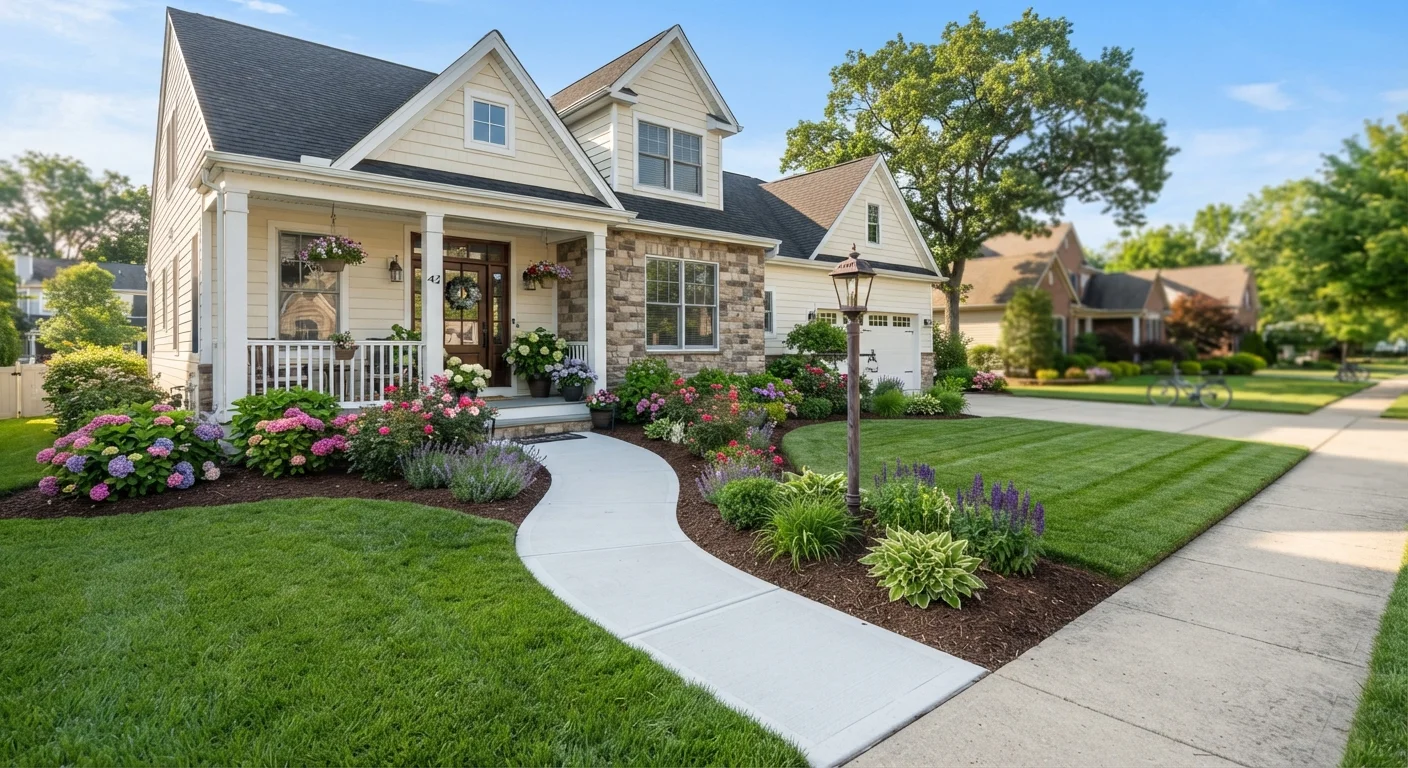
Why weekend yard work makes a real difference
A yard does not need a complete redesign to look well-kept. Most front yards suffer from the same handful of issues: soft lawn edges blurring into beds, weedy or bare garden areas, overgrown foundation shrubs, and grimy walkways. Each of these is fixable in an afternoon with common tools.
Professional landscapers bring value for large-scale projects, but many of the tasks that create the strongest visual impression are well within reach for a homeowner with a few hours to spare. If you are weighing when that professional help genuinely pays off, the comparison between DIY and hiring a pro is worth reading before you decide.
The steps below focus on the front yard, the area visible from the street, because that is where effort goes furthest for curb appeal. Work through them in order, since some tasks (edging, for example) create debris that you will want to clear before moving to the next stage.
What you will need
Step-by-step weekend yard improvements
Work through each task in the sequence below. Allow roughly 20 to 30 minutes per step for an average front yard, though that will vary with yard size and how much maintenance has been deferred.
Mow at the right height and in a straight pattern
Mow the lawn before doing anything else, since the mower will scatter clippings that you will need to clean up anyway. Set the mower deck to leave grass at about 3 inches for most cool-season grasses, or 2 to 2.5 inches for warm-season types like bermuda or zoysia. Cutting too short stresses the grass and invites weeds.
Mow in parallel lines running perpendicular to the street. Straight, consistent rows look more intentional from the curb than diagonal or circular patterns.
Edge all lawn borders cleanly
After mowing, cut a crisp edge wherever the lawn meets a bed, driveway, sidewalk, or curb. A half-moon edger or a string trimmer held vertically both work well. The goal is a clean vertical cut, roughly 2 to 3 inches deep, that separates turf from the adjacent surface.
Edge in one continuous direction rather than stopping and starting, which leaves uneven notches. Collect the soil and grass plugs you cut loose and add them to a compost pile or yard waste bag.
Weed and prep garden beds
Pull weeds by the root rather than snapping the stem. For tap-rooted weeds like dandelions, use a hand weeder or a narrow trowel to extract the full root. Weeds left with intact roots regrow within days.
Once weeds are cleared, rake the bed surface lightly to loosen any compacted soil crust. This helps mulch sit evenly in the next step.
Apply fresh mulch to garden beds
Spread 2 to 3 inches of mulch evenly across cleared beds. Keep mulch pulled back about 2 to 3 inches from plant stems and tree trunks to prevent rot and pest problems at the base. Shredded hardwood, pine bark, and cedar are all common options at most garden centers.
Fresh mulch gives beds a uniform, finished look even when plants are sparse or not yet in full growth. It also suppresses weed germination and retains soil moisture.
Trim overgrown foundation shrubs
Foundation shrubs that crowd windows, block the front door, or grow beyond the roofline of a porch make a house look neglected. Use pruning shears for branches up to half an inch in diameter and loppers for thicker growth.
The general approach is to remove about one-third of the plant at most in a single session, cutting back to a side branch or bud rather than leaving blunt stubs. Step back frequently to assess the shape from a distance, since it is easy to over-cut when working close up.
Clean walkways and the driveway
Sweep or blow loose debris off all hard surfaces. For concrete or pavers with visible algae, moss, or general grime, a garden hose with a spray nozzle will clean light buildup. For heavier staining, a pressure washer (available at most tool rental locations) removes what a hose cannot.
Pay attention to the edges where concrete meets grass or beds: debris accumulates there and makes even a recently edged lawn look messy if left in place.
Once the structural work is done, the yard benefits from ongoing attention. For yards in drier climates or those prone to summer water stress, low-water landscaping approaches can help maintain that tidy appearance with less weekly effort.
Sustaining the results between weekends
The visual improvement from one good session fades quickly without some routine maintenance. A 15-minute weekly pass through the front yard, pulling any new weeds and picking up debris, prevents the buildup that makes these tasks feel overwhelming the next time.
Mulch typically needs refreshing once a year, often in spring, to stay effective at blocking weeds and holding soil moisture. Edging stays clean longer if you use a half-moon edger or a string trimmer on a fixed schedule rather than waiting until growth is several inches beyond the bed line.
If you are considering expanding what you do with your outdoor space, a vegetable garden in the backyard is a natural next project. The family guide to starting a vegetable garden covers the practical details for first-time growers without requiring prior experience.