
How freezer cooking actually works
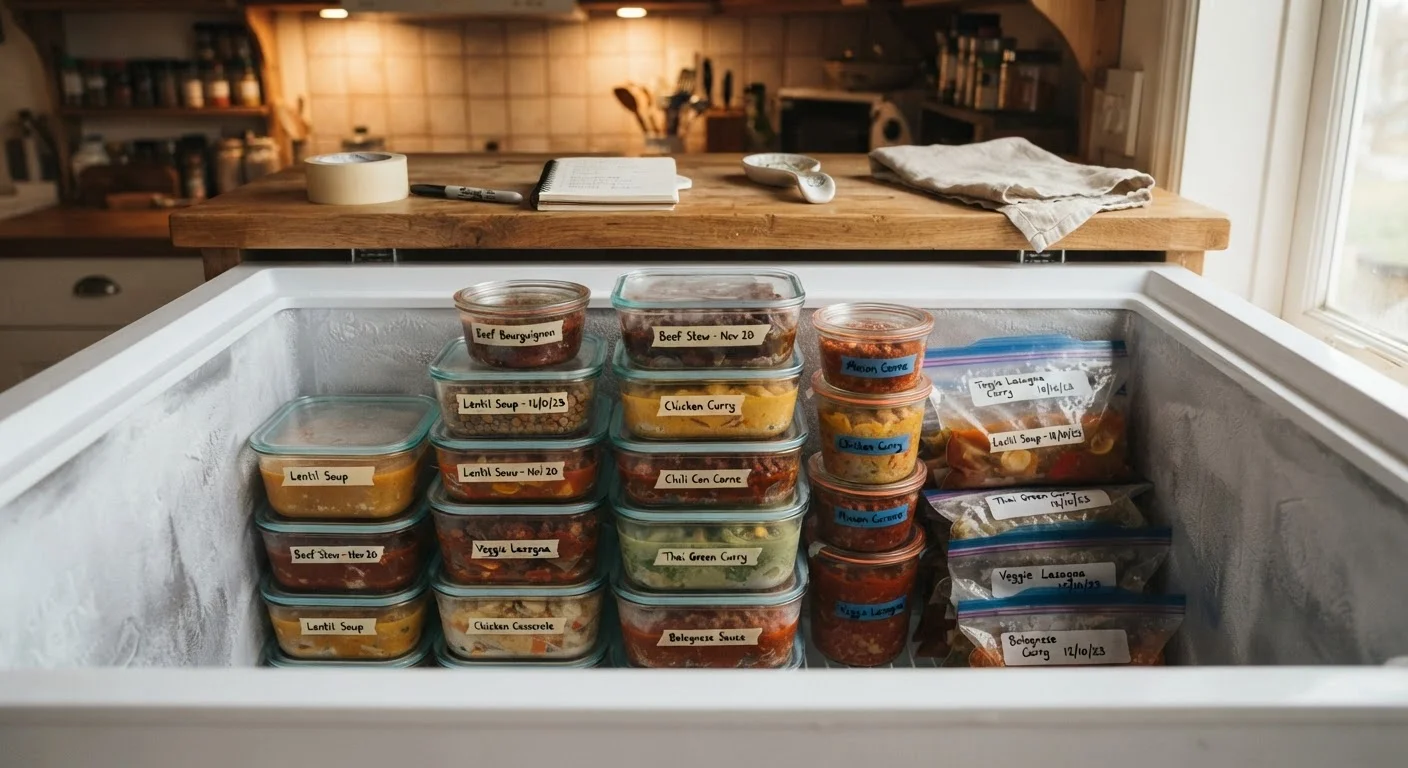
The basic mechanics are simple. A cook sets aside a block of time, typically two to four hours on a weekend, and prepares several recipes at once. Those meals are cooled, portioned into containers or bags, labeled with the contents and date, and moved into the freezer. On a weeknight, a meal comes out of the freezer in the morning to thaw in the refrigerator, and by dinnertime it needs only reheating.
Some families cook full meals. Others prep components: a large batch of taco meat, a pot of beans, cooked rice, or roasted vegetables that can be mixed and matched across multiple dinners. Either approach reduces the daily decision load and the time standing at the stove.
The weekly meal planning process fits naturally alongside freezer cooking. Planning which meals to make in a batch session means buying only what is needed, which cuts waste from the start.
Where the money savings come from
Freezer cooking produces savings through a few concrete mechanisms, not through any single dramatic change.
Bulk purchasing. Buying a 10-pound bag of chicken thighs or a large package of ground beef at warehouse or club stores typically costs less per pound than buying smaller packages at a standard grocery store. Cooking that protein in one session and freezing it in meal-sized portions captures that price difference without letting the food go bad.
Waste reduction. The USDA has estimated that American households discard a significant share of the food they buy. Freezer cooking moves perishables into the freezer before they can spoil, turning a potential loss into a future meal.
Fewer takeout purchases. On nights when there is nothing ready to cook and everyone is tired, ordering food is easy. A freezer stocked with ready meals removes that pressure point. A single avoided takeout order for a family of four can represent $40 to $60 or more, depending on location and what is ordered.
30-40%
Share of food American households discard
The USDA has estimated that roughly 30 to 40 percent of the US food supply is wasted, much of it at the household level, largely from perishables that spoil before use.
$40-$60+
Typical takeout cost for a family of four
Average family takeout or delivery orders in the US commonly run $40 to $60 or more per meal depending on location and menu, making even occasional substitutions meaningful over a month.
3 months
General safe freezer storage window for cooked meals
The USDA indicates most home-cooked meals maintain best quality in the freezer for up to two to three months when stored at 0 degrees Fahrenheit.
Pairing this habit with the core principles for grocery spending on a tight budget tends to produce more consistent results than either approach alone.
Recipes that work and recipes that do not
Not every dish freezes well, and learning which ones do saves a lot of frustration.
Soups and chilis are the most forgiving freezer foods. They thaw evenly, reheat without texture problems, and scale up easily in a large pot. Braised meats, like pulled pork or beef stew, also freeze well because the cooking liquid protects them from drying out. Cooked beans and lentils freeze reliably and cost very little to make in bulk.
Casseroles work for most families, though dairy-heavy sauces can sometimes separate slightly on reheating. Pasta bakes are fine if the pasta goes in slightly undercooked.
Foods to avoid freezing include anything with a high water content that has not been cooked, such as raw potatoes or cucumbers, and anything dressed with mayonnaise or vinegar-based sauces. Fried foods lose their texture completely.
A practical starting point is picking two or three recipes a household already makes regularly and testing how they freeze. Building from familiar ground keeps the process manageable. The affordable pantry staples that most budget-focused cooks stock, things like dried beans, canned tomatoes, and grains, translate directly into good freezer meal candidates.
Labeling, containers, and safety basics
Two problems derail most freezer cooking efforts: freezer burn and mystery containers. Both are preventable.
Freezer burn happens when air contacts the food surface. Pressing air out of zip freezer bags before sealing, using containers sized appropriately for the portion, and letting food cool completely before sealing all reduce the risk. Food with freezer burn is still safe to eat; it just tastes dry and off.
Mystery containers are a morale problem. When a meal is pulled from the freezer and nobody knows what it is or how old it is, it often gets thrown away. Every container should be labeled with the dish name, the date it was made, and reheating instructions if they are not obvious. A permanent marker on a piece of masking tape costs almost nothing and solves this entirely.
On the safety side, food should be cooled to room temperature before going into the freezer, and a refrigerator-thaw method (moving the container from freezer to fridge the morning before use) is safer than thawing on the counter. The USDA recommends against thawing frozen cooked food at room temperature for extended periods.
Start with one extra portion
If a full freezer cooking session feels overwhelming, start by making one extra portion of whatever is already on the menu. Freeze it, label it clearly, and use it the following week. This habit builds a freezer stockpile over time without requiring a separate dedicated cooking day.
Fitting freezer cooking into a real family schedule
The biggest obstacle for most families is finding the time for a cooking session. The good news is that freezer cooking does not require an elaborate all-day marathon to produce useful results.
A modest approach: make double or triple quantities whenever cooking a recipe that freezes well. The extra time is small, the cost increase is proportional, and the freezer fills gradually without needing a dedicated block of time. After a few weeks of doubling recipes, a household often has enough variety in the freezer to skip cooking several nights per week.
Households tracking spending closely may find it useful to connect this habit to a broader budget framework. A zero-based budgeting approach can make it easier to see exactly how much a reduction in takeout spending frees up each month, which in turn makes the case for investing a Sunday afternoon in a cooking session. The family finance resources available for households working on overall spending can provide additional context for where food costs sit relative to other household line items.