
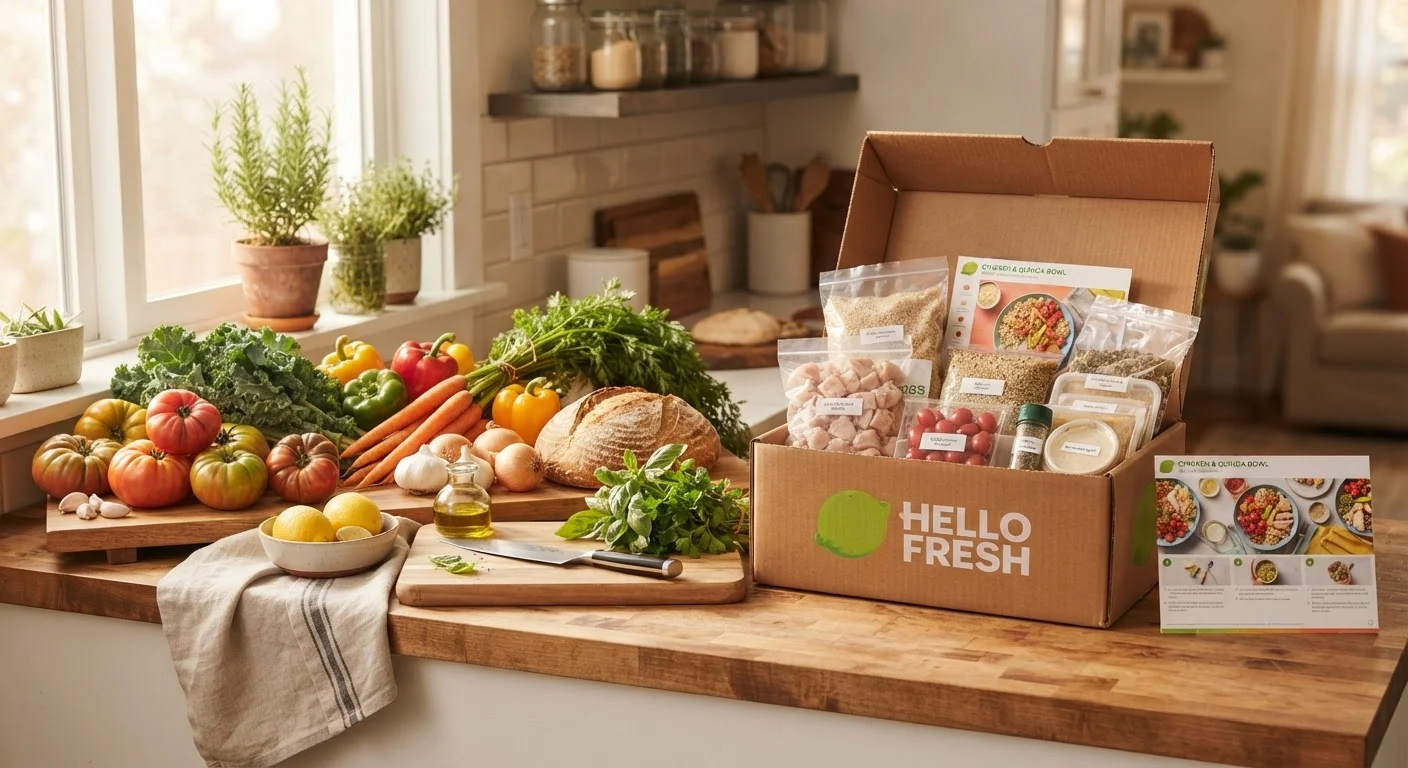
What each approach actually looks like day to day
Home cooking from scratch means building meals from whole or minimally processed ingredients: produce, grains, proteins, and pantry staples purchased independently and assembled at home. It requires planning, a shopping routine, and enough kitchen time to prepare meals. The meal planning process adds upfront effort but pays off in lower per-serving costs and flexibility.
Meal kit services ship pre-portioned ingredients and recipe cards to your door on a subscription basis. You still cook, but the decisions around what to make and what to buy are handled for you. Meals typically take 30 to 45 minutes to prepare and are designed for a set number of servings, with little room to scale up or repurpose leftovers.
The practical difference for most families comes down to time spent planning and shopping versus money spent per meal. Neither format guarantees a nutritious outcome on its own.
Nutrition: where both approaches win and fall short
The nutritional quality of any meal depends on what goes into it, not on who portioned the ingredients. Home cooking gives you complete control. You can increase vegetables, reduce sodium, use whole grains, and avoid the added sugars or saturated fats that appear in some pre-made sauces and seasoning packets. As the evidence on common nutrition myths shows, expensive or pre-packaged food is not automatically more nutritious than simple home-cooked alternatives.
Meal kits have improved their nutritional profiles over time, and many now offer calorie-conscious or vegetable-forward options. However, sodium levels in kit recipes can run high, and the limited ingredient flexibility means you cannot easily swap components for dietary reasons without deviating from the instructions. People managing specific health conditions or food allergies should speak with a registered dietitian before relying on any single meal format.
| Criterion | Home Cooking from Scratch | Meal Kit Services |
|---|---|---|
| Average cost per serving | Lower, often $2-$5 | Higher, often $8-$12 |
| Nutritional control | Full control over all ingredients | Limited; follows recipe as designed |
| Time to plan and shop | Requires weekly planning and shopping | Minimal; ingredients arrive pre-selected |
| Cooking skill required | Moderate to high | Low to moderate with guided steps |
| Sodium and additives | Fully adjustable by cook | Often higher in seasoning packets |
| Food waste risk | Higher without careful planning | Lower due to pre-portioned ingredients |
| Packaging waste | Lower | Higher due to individual packaging |
| Scalability for large families | Flexible; easy to scale up | Limited to set serving sizes |
One area where meal kits may offer a genuine nutritional benefit is for households that would otherwise rely on fast food or highly processed convenience meals on busy nights. Cooking a kit meal at home, even with moderate sodium, is generally a different nutritional situation than a drive-through order.
Cost: a realistic comparison for American families
Home cooking from scratch remains the more affordable option for most families. Staple ingredients such as dried legumes, whole grains, eggs, canned tomatoes, and seasonal produce carry a low cost per serving when bought in reasonable quantities. The right pantry staples can make scratch cooking both economical and genuinely satisfying to eat.
$2-$5
Typical home-cooked cost per serving
The USDA Economic Research Service consistently finds that home-prepared meals cost substantially less per serving than restaurant or convenience alternatives.
$8-$12
Typical meal kit cost per serving
Consumer Reports analysis has found that meal kit services generally price between $8 and $12 per serving, depending on the plan and number of meals selected.
72%
Americans who say cost is a top food concern
A 2023 International Food Information Council survey found that cost is among the top factors influencing food purchase decisions for most American households.
Meal kits cost more per serving than equivalent home-cooked meals prepared from scratch, though they generally cost less per serving than dining out at a restaurant. Subscription pricing varies, and costs can add up quickly for larger households since most kits are portioned for two or four servings. Food waste is lower with kits because ingredients arrive pre-measured, but packaging materials increase household waste in a different way.
For budget-focused families, scratch cooking with a consistent shopping list and a weekly plan will almost always spend less. The myth that budget cooking means poor nutrition is worth setting aside: affordable ingredients can form the basis of varied, nutritionally sound meals.
Practical fit for real family life
The better approach for any household depends on its actual constraints, not on an abstract ideal. A family with two working parents and young children may find that a few meal kit nights per week replace takeout habits and reduce evening stress, while scratch cooking handles the rest of the week at lower cost. These two approaches are not mutually exclusive.
Home cooking does require building and maintaining a skill set. Families less experienced in the kitchen may find scratch cooking intimidating at first, particularly when recipes do not provide precise guidance. Meal kits address this by structuring each step, which can gradually build confidence. That confidence transfers: many people who begin with kits eventually cook more independently.
For families focused on staying healthy without high spending, scratch cooking with a thoughtful pantry and a weekly plan offers the most control and the lowest long-term cost. Meal kits fit best as a bridge, not a permanent replacement. As always, anyone with specific dietary needs or chronic health conditions should work with a qualified healthcare provider rather than adjust their diet based on general information alone.
This article is for general informational purposes only and does not constitute medical, nutritional, or dietary advice. Consult a qualified healthcare professional or registered dietitian for guidance specific to your health needs.