
Why air leaks matter
Small gaps around doors, windows, and pipes may not look like much, but they add up. The U.S. Department of Energy has noted that air leaks can account for 25 to 40 percent of the energy used for heating and cooling a typical home. That heat loss in winter and heat gain in summer forces your HVAC system to work harder, which shows up directly on monthly utility bills.
The fix is not expensive equipment or professional contractors in most cases. Weatherstripping, caulk, and door sweeps are the three main tools for the job, each suited to a different type of gap or surface. Choosing the right one matters because using the wrong material leads to early failure and wasted effort.
For a broader look at where air sealing fits within home energy efficiency, see our guide to insulation myths and misconceptions.
| Typical energy loss from air leaks | 25 to 40 percent of heating and cooling energy (U.S. Department of Energy) |
| Best material for moving joints | Weatherstripping (foam, V-strip, or bulb seal) |
| Best material for fixed cracks | Caulk (silicone for exterior, acrylic latex for interior) |
| Gap size requiring backer rod before caulking | Wider than approximately 1/4 inch |
| Easiest leak detection method | Incense stick or tissue strip on a windy day |
Where to find air leaks
Before buying materials, locate the gaps. Common problem spots include:
- The edges of exterior doors and the gap at the door bottom
- Window sash frames where the sash meets the frame or sill
- Pipe and wire penetrations through exterior walls
- The joint where the wall meets the floor in older construction
- Attic hatches and pull-down stairs
A simple detection method: on a windy day, hold a lit incense stick or a thin strip of tissue near suspected gaps. Movement in the smoke or tissue indicates airflow. Thermal imaging cameras, available at many equipment rental centers, make leaks visible as temperature differences but are not necessary for a standard home inspection.
Weatherstripping: movable joints
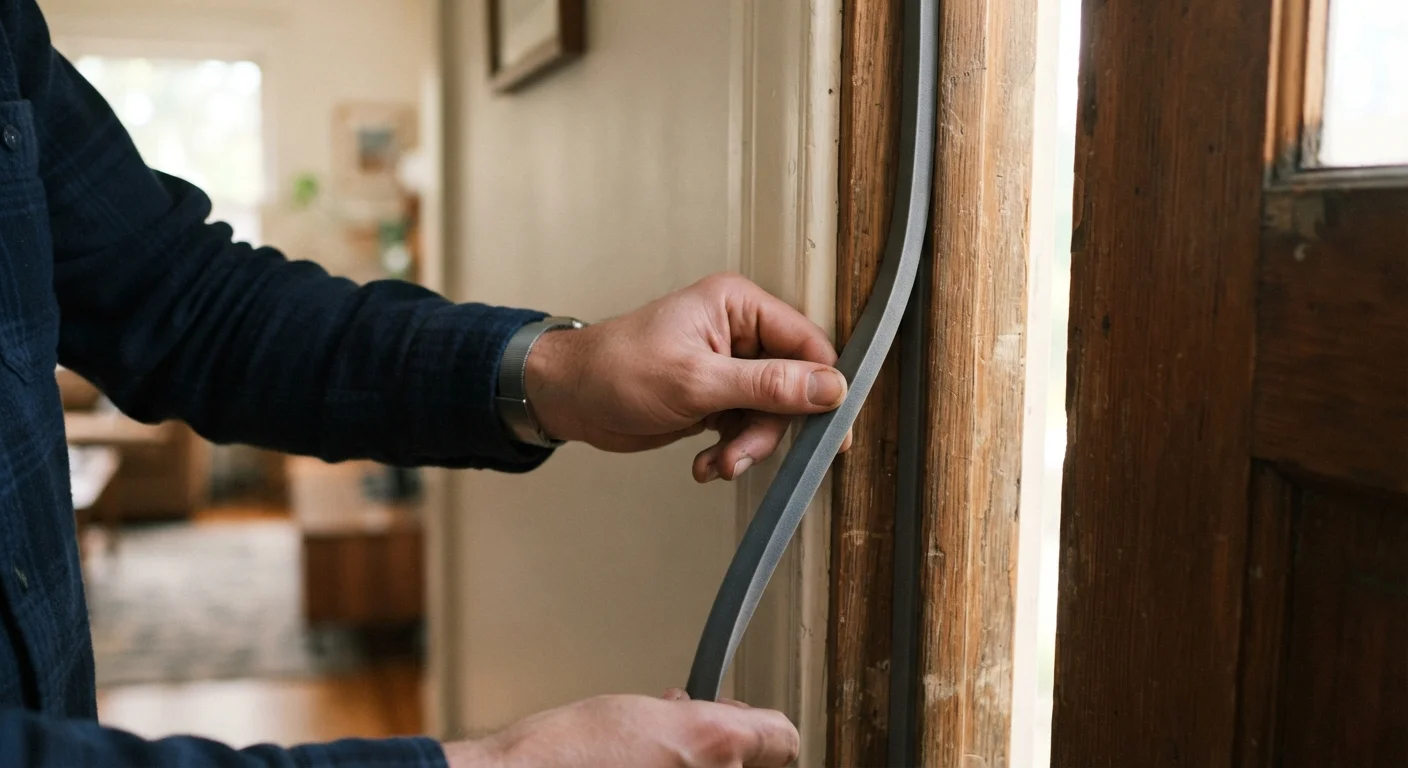
Weatherstripping is designed for surfaces that move, meaning the edges of doors and operable windows. Because these surfaces open and close repeatedly, the seal material must compress and recover without cracking or peeling.
Common types include:
- Foam tape: The most accessible option, suitable for low-traffic windows and rarely used doors. It compresses well but degrades faster than other types under daily use.
- V-strip (tension seal): A folded strip of plastic or metal installed inside the door or window channel. It springs open against both surfaces and holds up well to repeated use.
- Door gasket or bulb seal: A rubber or vinyl profile that fits into a kerf cut in the door stop. Produces a firm seal and lasts many years when properly installed.
When measuring, close the door or window and note where light passes through. Weatherstripping should contact the frame firmly enough to slightly compress when the door is latched, but not so tightly that the door is hard to close.
Caulk: stationary cracks and gaps
Caulk belongs on fixed surfaces where there is no movement. Typical applications include the joint between a window frame and exterior siding, gaps where pipes penetrate walls, and cracks in door frames that have separated from the surrounding trim.
Choosing the right caulk type prevents premature failure. Silicone caulk resists moisture and temperature swings well, making it suited for exterior use and around windows. Acrylic latex caulk is easier to apply and paintable, which makes it a practical choice for interior trim gaps. For gaps wider than about a quarter inch, a backer rod (a foam cord pressed into the gap first) should be used before caulking to avoid a thick, unsupported bead that will crack.
Caulk used around windows serves a different function than the type used in bathrooms. If you are working in a wet area as well, the breakdown of grout, caulk, and sealant for bathrooms explains those distinctions clearly.
Application tips: clean and dry the surface before applying, cut the tube tip at a 45-degree angle for a controlled bead, and smooth with a wet finger or a caulk tool within a few minutes. Caulk applied to a dusty or wet surface will not bond and will fail quickly.
Door sweeps: sealing the bottom gap
The gap at the base of an exterior door is often the largest single air leak in a home. A door sweep attaches to the bottom of the door and bridges this gap when the door is closed.
Automatic door sweeps retract slightly when the door opens (preventing the brush or vinyl fin from dragging on carpet or tile) and drop back down when the door closes. Standard fixed sweeps work well on smooth floors where the sweep can glide without resistance. For doors with significant gaps due to settling, a door shoe (which wraps around the bottom edge of the door) provides a more complete seal than a surface-mounted sweep.
Installation requires only a screwdriver in most cases. Position the sweep so the seal contacts the threshold or floor without forcing the door to drag. Test by sliding a piece of paper under the closed door; resistance should be felt across the full width.
Reducing drafts through better sealing is one part of a wider set of strategies covered in our overview of household utility costs families can realistically reduce.
Weatherstripping
A flexible material applied to the edges of movable building components such as doors and windows to block air, water, and dust when closed. Common materials include foam, vinyl, rubber, and metal.
Backer rod
A foam cord pressed into wide gaps before caulking. It supports the caulk bead, prevents it from sinking too deep, and reduces the amount of caulk needed.
Door sweep
A strip of material attached to the bottom of a door that seals the gap between the door and the threshold or floor when the door is closed.
Kerf cut
A narrow slot cut into a door stop or frame to receive a strip-type seal or gasket, holding it in place without adhesive.
Silicone caulk
A flexible sealant made from silicone polymers. It resists moisture, UV exposure, and temperature changes well, making it suited for exterior joints and areas that are wet or subject to sunlight.
Acrylic latex caulk
A water-based sealant that is easy to apply, cleans up with water, and can be painted once cured. Best suited for interior gaps in dry or low-moisture areas.