
Why insulation myths persist
Insulation is one of those home improvement topics where confident-sounding advice spreads quickly, often from well-meaning neighbors, outdated packaging, or articles that oversimplify the science. For families trying to reduce utility costs, acting on a misconception can mean spending money on materials that do not deliver the expected results, or even creating new problems like moisture damage.
The good news is that accurate information is available, and most DIY insulation projects are manageable once the facts are straight. See our guide to sealing air leaks for a companion look at draft control, which works alongside insulation.
Myth
A higher R-value always means lower energy bills.
Fact
R-value measures resistance to heat flow through insulation material, but air leaks bypass insulation entirely, so sealing gaps matters as much as the R-value rating.
Insulation slows conductive heat transfer, but air infiltration moves heat through gaps, cracks, and unsealed penetrations in a completely different way. A well-insulated wall with an unsealed electrical outlet or plumbing chase can still lose a significant amount of conditioned air. Before upgrading R-value, check for drafts around windows, outlets, and attic hatches. Addressing those gaps first often produces a more noticeable result than adding more insulation material.
Myth
As long as the attic has some insulation, it is doing its job.
Fact
Partial or uneven attic insulation leaves thermal weak spots that undermine the performance of the areas that are properly covered.
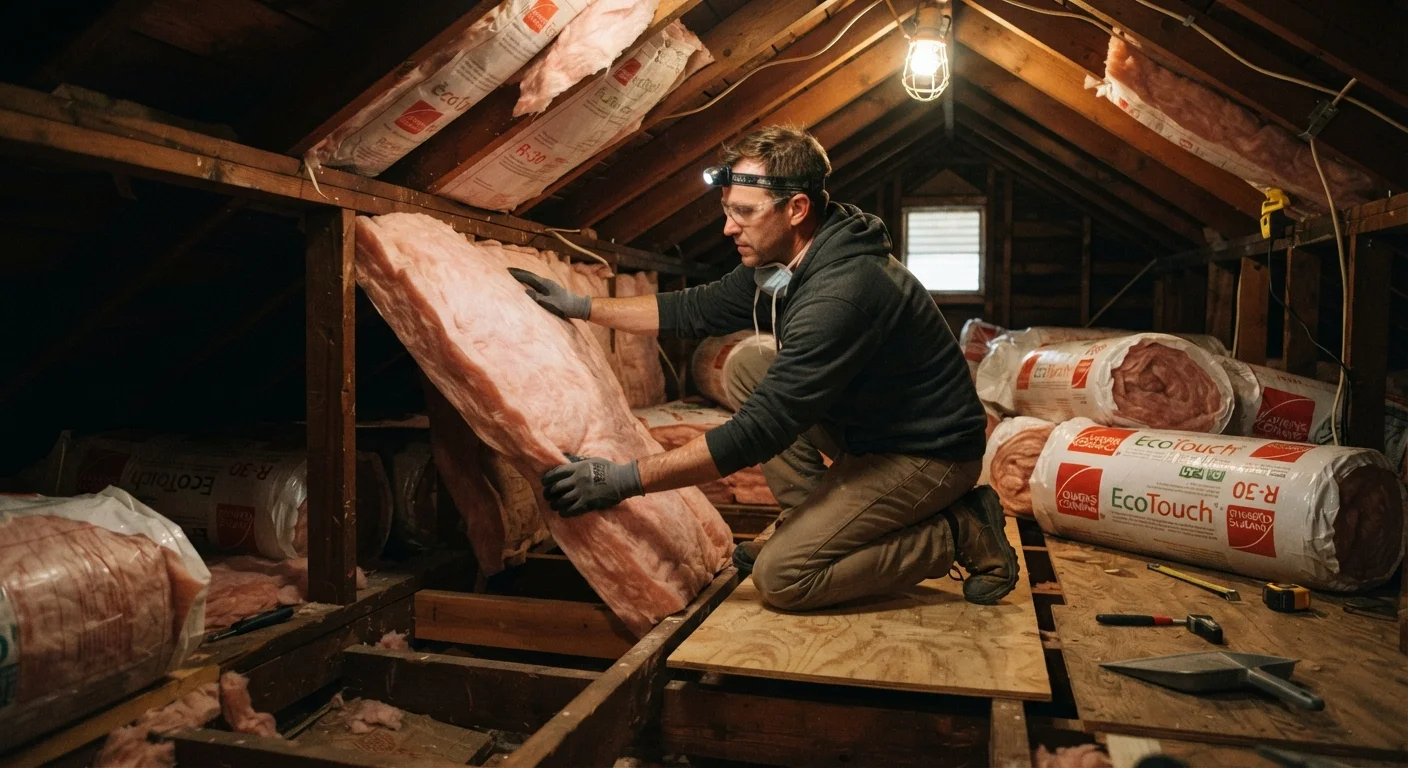
Attic floors need consistent depth across the entire surface, including corners, areas near eaves, and spots around recessed lights or attic hatches. Insulation that is compressed under stored boxes loses R-value proportionally to how much it is compressed. Blocking soffit ventilation with insulation also creates moisture and structural problems. A quick visual inspection with a flashlight can reveal thin spots, and adding insulation to those areas is typically a straightforward DIY task.
Myth
Vapor barriers belong on every insulation project.
Fact
Vapor barriers are climate-specific and can cause moisture to become trapped inside walls or ceilings when used where they are not appropriate.
In cold climates, a vapor barrier on the warm interior side of a wall assembly helps prevent humid indoor air from condensing inside the wall cavity. In mixed or hot-humid climates, that same barrier can trap moisture coming from outside, leading to mold and rot. The correct approach depends on your climate zone and wall assembly. Before installing any vapor retarder, check the IRC (International Residential Code) guidance for your region or consult a building professional, because getting this wrong can cause damage that is expensive to repair.
Myth
Doubling insulation thickness doubles your energy savings.
Fact
The relationship between insulation thickness and energy savings is not linear: each additional inch of insulation produces a smaller incremental benefit than the previous one.
This effect is known as diminishing returns in thermal resistance. Going from R-11 to R-19 in an attic, for example, produces a larger proportional improvement than going from R-38 to R-60. This matters for budgeting: spending significantly more on insulation above the recommended level for your climate zone may not translate into proportionally lower bills. The DOE's climate zone recommendations exist partly because they reflect the point where additional insulation stops paying back in a reasonable timeframe.
Myth
Spray foam insulation seals and insulates so well that other air sealing is unnecessary.
Fact
Spray foam applied as a DIY product in cans fills small gaps effectively, but larger cavity applications require professional equipment and training to achieve rated performance.
Consumer-grade spray foam cans work well for sealing around pipes, window frames, and small penetrations. Two-component DIY foam kits for larger areas can produce uneven results if mixed incorrectly or applied in the wrong temperature range, and improperly cured foam can off-gas chemicals. For whole-wall or full-cavity spray foam, a licensed contractor with calibrated equipment is the appropriate choice. Attempting large-scale spray foam as an inexperienced DIYer can result in a costly mess that is difficult to remove.
What actually determines energy savings
Energy savings from insulation depend on three things working together: the right R-value for your climate zone, consistent coverage without gaps or compression, and an air barrier that prevents conditioned air from escaping before insulation can slow its movement. Skipping any one of those elements reduces the benefit of the other two.
The U.S. Department of Energy publishes recommended R-values by climate zone, and those figures account for typical construction in each region. Matching your project to those guidelines, rather than simply buying the thickest product available, is a more reliable approach. For a broader look at where household spending can realistically shift, the guide on saving money on utilities covers the full picture.
If you are weighing whether to tackle insulation yourself or bring in a professional, this look at DIY vs. hiring a pro can help you weigh the trade-offs honestly before committing.
Do not compress batt insulation
Batt insulation is rated for its full, uncompressed thickness. Stuffing a thicker batt into a shallower cavity reduces its effective R-value, sometimes significantly. Always use batts sized to fit the cavity depth without folding or compressing them.