
Why the 3,000-mile rule still haunts drivers
The 3,000-mile oil change interval became conventional wisdom decades ago, when engine tolerances were looser, oil formulations were simpler, and automakers had less data on real-world wear. Quick-lube shops reinforced it because it brought customers back more often. The number stuck.
The problem is that it no longer reflects how most cars are built or how modern motor oil performs. Engines manufactured in the last 15 to 20 years are built to tighter specifications, and oil chemistry has improved significantly. Sticking to 3,000 miles on a late-model vehicle running synthetic oil is, in most cases, spending money the engine does not need.
Myth
You should change your oil every 3,000 miles to protect your engine.
Fact
Most modern vehicles with conventional oil can go 5,000 to 7,500 miles between changes, and synthetic oil often allows 10,000 miles or more.
The 3,000-mile figure predates modern oil formulations and tighter engine manufacturing tolerances. The AAA published findings showing that most vehicles are driven under conditions that qualify for the longer intervals specified in owner's manuals. Following the 3,000-mile rule on a vehicle rated for longer intervals does not hurt the engine, but it does cost more money without a meaningful benefit.
Myth
Dark oil means it is dirty and needs to be changed immediately.
Fact
Oil darkens quickly as it does its job, and color alone is not a reliable indicator of whether oil needs changing.
Motor oil turns dark partly because it suspends combustion byproducts and keeps them from depositing on engine surfaces. A dark color within the first thousand miles of a fresh change is normal. What matters is whether the oil has degraded beyond its useful viscosity and additive life, which color cannot tell you. If you want to assess oil condition, many mechanics use oil analysis kits, which test viscosity and contamination levels directly.
Myth
Skipping an oil change by a few hundred miles will damage your engine.
Fact
Going slightly over the recommended interval occasionally is unlikely to cause measurable engine damage in a well-maintained vehicle.
Oil does not suddenly lose its protective properties the moment an odometer rolls past the target mileage. Degradation is gradual. Running significantly and consistently over the recommended interval is a real problem, but a few hundred extra miles on an otherwise healthy oil change schedule is not a crisis. That said, consistently delaying oil changes by thousands of miles does shorten engine life over time.
Myth
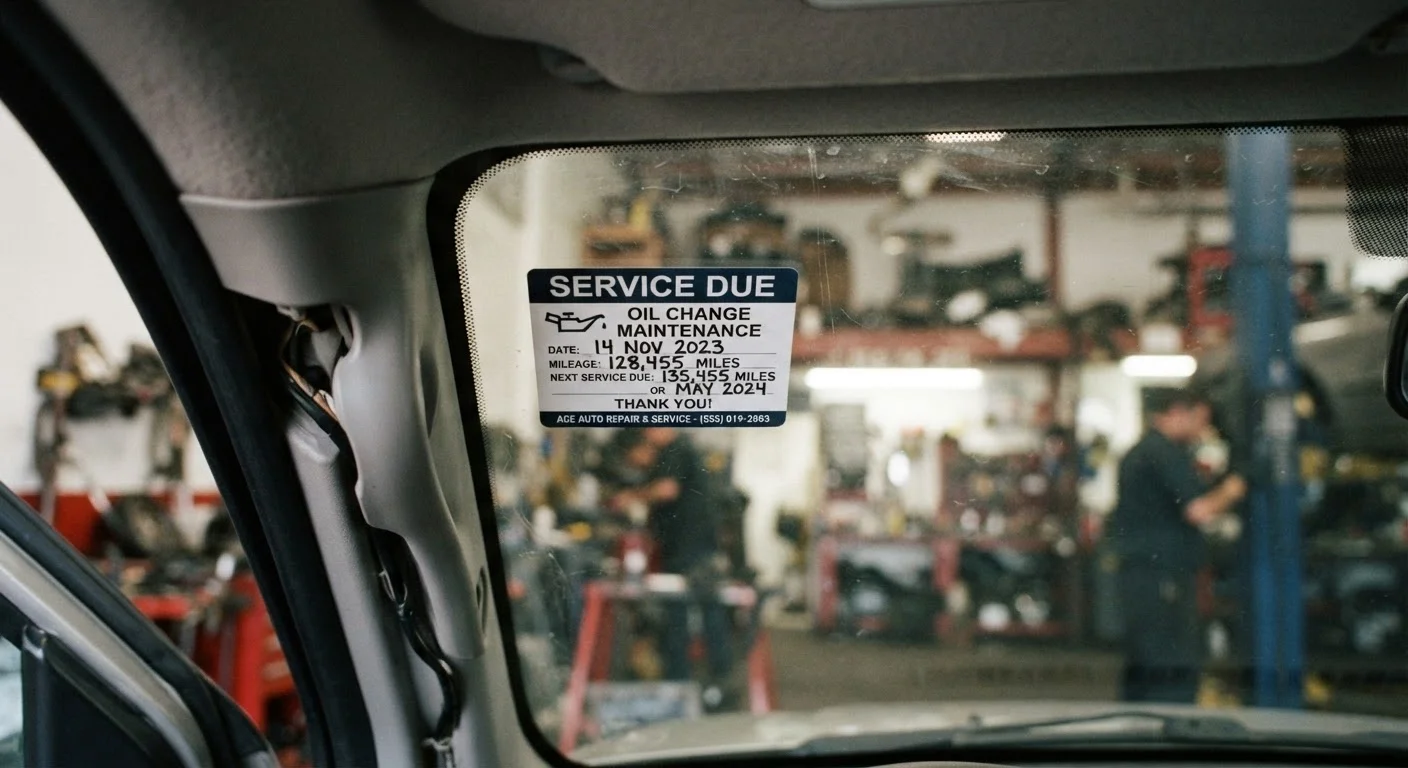
The sticker the shop puts on your windshield reflects your car's actual needs.
Fact
Quick-lube shops typically set reminder stickers to 3,000 miles regardless of the vehicle or oil type used.
The interval on a shop sticker is a business decision, not an engineering recommendation. Some shops have moved toward more accurate intervals as synthetic oil use has grown, but many still default to 3,000 miles as a standard. The only interval you should trust is the one in your owner's manual or the readout from your vehicle's onboard oil life monitoring system, if it has one.
For families tracking car ownership costs, unnecessary oil changes are a recurring drain that adds up quietly over years of ownership.
What your owner's manual actually says
Every vehicle manufacturer publishes a recommended maintenance schedule specific to that engine and oil type. For most vehicles built after 2010 running full synthetic oil, the manufacturer-specified interval falls between 7,500 and 10,000 miles. Many newer models from several major manufacturers specify 10,000 to 15,000 miles under normal driving conditions.
Some vehicles include an oil life monitoring system that calculates when an oil change is actually needed based on engine temperature cycles, rpm patterns, and trip length. These systems are calibrated by engineers with full access to the engine's design parameters. When the monitor tells you to change the oil, change it. When it does not, you generally do not need to.
The windshield sticker a shop puts on your car is not calibrated to your specific vehicle. It is a marketing tool set to a number designed to get you back in the door.
When a shorter interval does make sense
Manufacturer intervals assume what the industry calls "normal" driving conditions. Your conditions may not qualify. The following situations can accelerate oil degradation and may justify more frequent changes:
- Frequent short trips under five miles, where the engine rarely reaches full operating temperature
- Regular towing or hauling heavy loads
- Driving in sustained extreme heat or extreme cold
- Stop-and-go commuting for most of your weekly mileage
- Operating a high-mileage vehicle with older seals that may allow more contaminants into the oil
If your driving fits one or more of those conditions, check the "severe service" schedule in your owner's manual rather than defaulting to 3,000 miles. The severe schedule is still usually longer than 3,000 miles for most modern vehicles.
Drivers working to keep a high-mileage vehicle reliable should pay particular attention to the oil condition and check the dipstick between changes rather than relying solely on mileage.
Synthetic vs. conventional oil and what it means for your wallet
Synthetic oil costs more per quart than conventional oil. Over a year of ownership, the math usually still favors synthetic when you factor in the longer intervals. Fewer oil changes per year means lower total spending on oil and labor, and less time at a shop.
Switching from 3,000-mile conventional oil changes to 7,500-mile synthetic changes cuts the number of annual oil changes roughly in half for a driver putting 15,000 miles per year on their vehicle. The per-service cost is higher, but the annual total is typically lower.
If your vehicle's manufacturer specifies conventional oil, do not assume synthetic is always the better choice without confirming compatibility in the owner's manual. Some older engine designs were not engineered with synthetic oil's viscosity characteristics in mind.
This article is for general informational purposes only. For specific maintenance decisions, consult your vehicle's owner's manual and a qualified mechanic familiar with your make and model.