
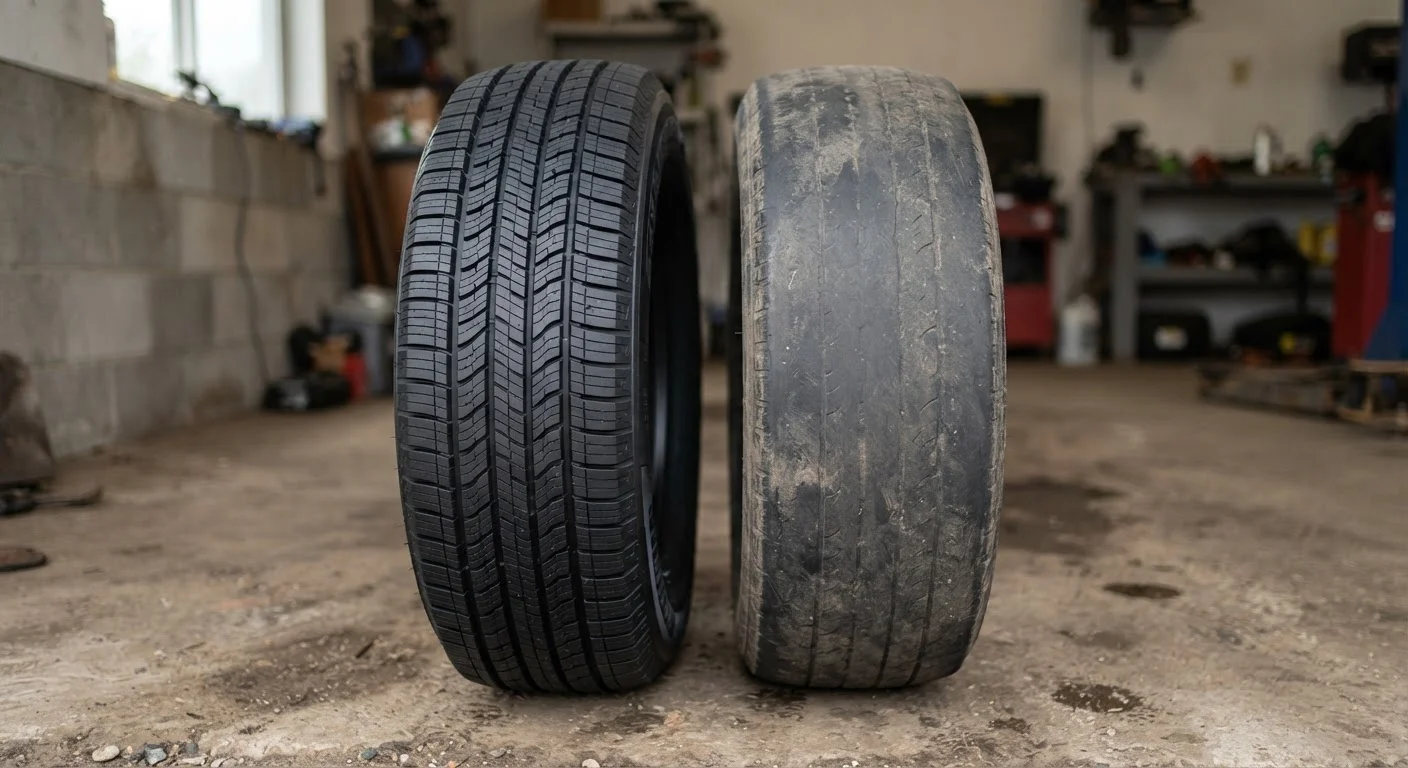
What you actually get with each option
A new tire leaves the factory with a full tread depth, typically 10/32 to 11/32 of an inch for a standard passenger tire. The manufacturer certifies it meets federal safety standards, and most come with a treadwear warranty measured in miles. You know exactly how old it is, how it was stored, and that no one has previously driven on it.
A used tire is any tire that has been mounted and driven on, then removed for resale. It might have come off a lease return with 20,000 miles on it, or off a wrecked vehicle with unknown damage. Tread depth varies, age is often unlabeled, and internal structure cannot be assessed without specialized equipment. The price is lower, sometimes by half, but that price reflects genuine uncertainty about what you are buying.
The four-digit DOT date code molded into every tire's sidewall tells you the week and year of manufacture. A tire reading "2419" was made in the 24th week of 2019. Most tire manufacturers and safety bodies, including the National Highway Traffic Safety Administration (NHTSA), recommend replacing tires after six years regardless of tread depth, and treating any tire over ten years as unsafe. When buying used, that clock may already be most of the way expired.
The real cost comparison
Used tires typically sell for $25 to $75 each, compared to $80 to $200 or more for a new passenger tire, before mounting and balancing. That upfront gap looks significant across a set of four. However, a used tire sold with 5/32 of an inch of tread has roughly half the remaining mileage of a new tire starting at 10/32. Cost per mile of use is a more honest comparison than sticker price.
| Criterion | New tires | Used tires |
|---|---|---|
| Upfront cost (per tire) | $80 to $200+ | $25 to $75 |
| Tread depth at purchase | Full (10/32 to 11/32 in.) | Partial and variable |
| Known age | Yes, labeled at point of sale | Requires DOT code check |
| Manufacturer warranty | Yes, typically mileage-based | None |
| Road-hazard coverage | Often included or available | Not available |
| Internal damage risk | None (unused) | Unknown without dismount inspection |
| Estimated remaining lifespan | Full treadwear cycle | Partial, often 50% or less |
There are also hidden costs on the used side. Some shops that sell used tires charge the same labor rate for mounting and balancing as they do for new ones. If a used tire fails early, you pay mounting costs again. New tires also frequently include road-hazard coverage that reimburses you for a replacement if the tire is damaged by a pothole or road debris within the warranty period, a protection used tires never carry.
For guidance on choosing a shop you can trust with this kind of work, see our practical framework for evaluating any mechanic.
Safety risks that cost comparisons miss
Tread depth is the number most people check, but it is not the only factor that matters. Internal damage is the bigger concern with used tires. A tire that hit a curb hard or ran flat for even a short distance can have broken steel belts or a compromised bead, and none of that is visible from the outside. Belt separation at highway speed can cause a sudden blowout with very little warning.
NHTSA data has consistently linked tire failures to crashes resulting in fatalities, with a notable share of those failures involving tires that were either older than six years or structurally compromised before the crash. That context matters when weighing a $50 savings per tire.
A visual inspection before purchase can catch obvious problems: cracks in the sidewall, bulges, uneven wear patterns, exposed cords, and previous repairs. But it cannot catch internal damage. A tire technician with a dismount machine can inspect the interior, though not every used tire seller will permit that inspection before purchase.
If your tire pressure warning light or any other dashboard alert is active when you are evaluating tires, address that first. Our article on warning lights families often ignore covers which signals need immediate attention.
When used tires make more sense
There are narrower situations where a used tire is a defensible choice. A second vehicle that rarely leaves town, a car being kept for just a few more months before trade-in, or an emergency replacement when budget constraints leave no other option: in these cases, a properly vetted used tire from a reputable shop can be a reasonable short-term solution.
The minimum standard for any used tire worth considering: at least 4/32 inch of tread remaining (use a quarter inserted upside down into the tread groove; if you can see the top of Washington's head, the tread is too low), no sidewall cracking or bulging, no visible repairs, and a DOT date no older than six years from the current date. Buy from a shop that will provide the DOT code in writing and allow a technician to inspect the tire.
How to read the DOT date code
Every tire sold in the U.S. has a DOT identification number molded into one sidewall. The last four digits are the date code: the first two digits are the week of manufacture and the last two are the year. For example, "3721" means the 37th week of 2021. If a seller cannot show you this code, or if the code is missing or illegible, do not buy the tire.
For the full picture of maintaining a vehicle on a family budget, the complete family car ownership guide covers everything from first service appointments to knowing when to sell.