
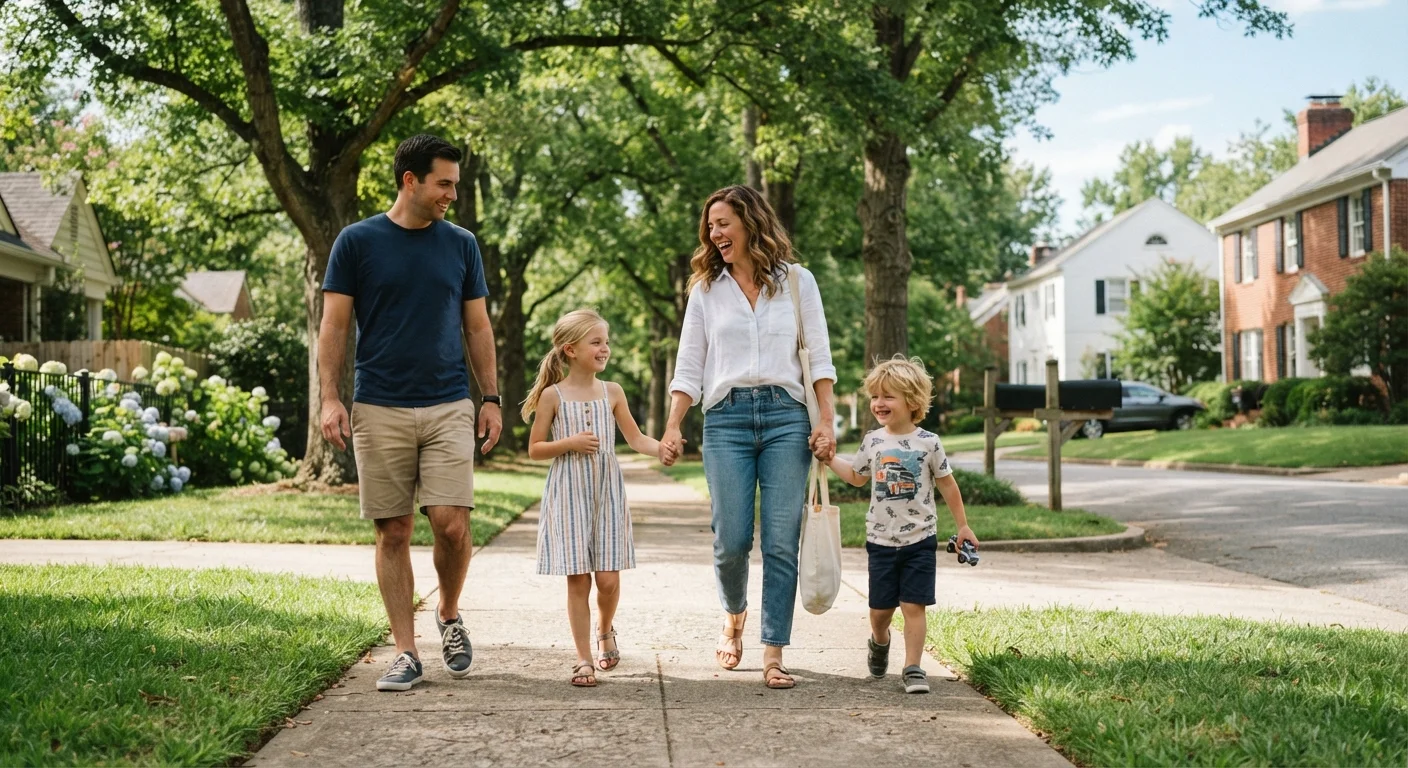
Why walking works for families
Walking is one of the few physical activities that works across ages without modification. A five-year-old, a grandparent, and a teenager can all participate on the same walk without anyone needing to slow down excessively or push too hard. That flexibility is what makes it a practical starting point for families who want to move more but face the usual obstacles: cost, scheduling, and competing interests.
Regular walking is associated with a range of general health benefits, including cardiovascular fitness, mood regulation, and better sleep. For children, unstructured outdoor time also supports attention and social development. The strategies that support family health on a budget consistently point to walking as a foundational, free option worth prioritizing before anything else.
The practical barrier is rarely motivation at the start. It is usually consistency. A family that walks three times a week for fifteen minutes will see more benefit over time than one that plans hour-long weekend hikes but skips them when schedules slip. The steps below address that consistency problem directly.
This article is for general informational purposes only and is not medical advice. Consult a qualified healthcare professional before beginning a new exercise routine, especially if any family member has a health condition.
How to build a walking routine your family will actually keep
Follow these steps in order. Each one is designed to reduce a specific friction point that causes families to abandon new routines.
Decide on a realistic starting frequency and duration
Choose a target the whole family can hit on a busy week, not an ideal week. For most families, two or three walks per week at ten to fifteen minutes each is a workable starting point. Write it down somewhere visible, a shared calendar, a note on the fridge, so it functions as a commitment rather than an intention.
Anchor the walk to something you already do
Habits form more reliably when attached to an existing daily activity. A walk right after dinner, before school drop-off, or following a Saturday morning errand reduces the mental load of deciding when to go. Pick the anchor that already happens consistently in your household and attach the walk to it.
Choose a route that suits your youngest or least fit member
The walk should be accessible to whoever needs the most accommodation. Flat, paved surfaces work well for strollers and young children. Short loops are better than out-and-back routes when toddlers are involved, because you can cut the walk short without backtracking. Let children help choose the route when possible; involvement increases willingness to participate.
Check footwear before the first walk
Proper footwear matters more than most families expect. Shoes that fit well and provide basic arch support reduce discomfort that causes people to stop walking. Check that children's shoes fit correctly, as feet grow quickly and ill-fitting shoes are a common and overlooked source of fatigue and reluctance. No special athletic footwear is required; existing well-fitting sneakers are sufficient for most families starting out.
Add a simple tracking method
Tracking does not require an app or device. A paper log, a jar where family members add a coin or a stone after each walk, or a monthly calendar with checkmarks all work. Visible progress helps families recognize consistency they might otherwise overlook, and it gives children a concrete sense of accomplishment. Keep the method simple enough that it takes under thirty seconds to update.
Build in flexibility from the start
A routine is sustainable only if missing one walk does not end it. Agree in advance that a skipped walk is just a skipped walk, not a failure. The goal is consistency over weeks and months, not perfection in any given week. Families who treat a missed day as neutral rather than as a setback return to the habit more reliably.
Make it low-stakes on difficult days
On days when energy is low or time is short, a five-minute walk around the block still counts. Maintaining the habit at a reduced level is more useful than skipping entirely. The goal is to keep the behavior in place, not to hit a specific distance or duration every time.
Common sticking points and how to handle them
Even a well-designed routine will hit obstacles. Weather is the most common. Identifying one or two indoor alternatives in advance, such as a covered mall loop or a school gym during open hours, prevents a rainy week from ending the habit entirely.
Age gaps can create tension when older children feel a family walk is too slow or too short. Giving them a role, keeping track of distance, taking photos, or choosing the next route, tends to resolve this more effectively than trying to reframe the activity as exciting.
If the whole family is struggling to stay consistent, the common reasons health habits stall often come down to over-ambitious targets and missing environmental cues. Scaling back the goal and anchoring the walk to a reliable daily trigger usually restores momentum faster than adding motivation tactics.
Walking outdoors also pairs naturally with other health habits. Families who build a routine around evening walks often report that wind-down time improves, which connects directly to the sleep hygiene practices that support rest without any added cost.